Scaling and Sustaining Purposeful Pathways Through Enabling Conditions
Action Guide

This action guide is a companion to the Commission for Purposeful Pathways report.
Too many young people leave high school without a clear, supported path for their future. This report introduces a framework and a call to action for the field to implement purposeful pathways.
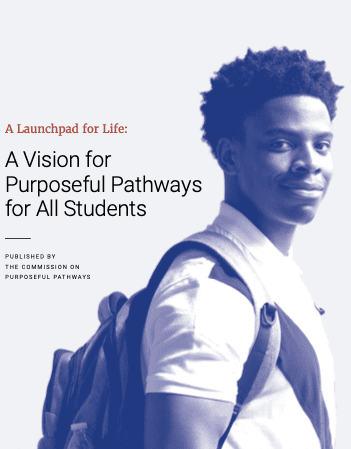
This action guide, Scaling and Sustaining Purposeful Pathways Through Enabling Conditions, is a companion resource designed to help regions and states move from vision to lasting implementation. It outlines five enabling conditions — the policies, practices, systems and structures required to scale and sustain purposeful pathways over time. Intended for cross-sector teams spanning K-12, postsecondary education, workforce and intermediary organizations, this guide offers a roadmap, implementation phases, detailed examples and a self-assessment tool. It is most powerful when used collaboratively across sectors to strengthen alignment, governance, funding and accountability.
Work SupportedWork supported by this action guide
This guide supports regions and states in shifting toward system-level connectivity and sustainability by supporting five enabling conditions:
- Vision and Plan: Articulate and publish a shared cross-sector vision for purposeful pathways and translate it into a concrete action plan with goals, metrics, timelines and clear ownership.
- Governance and Staffing: Establish a cross-sector team backed by governance structures and intermediary support to implement and sustain the work.
- Data and Accountability: Develop shared metrics, dashboards, accountability systems and longitudinal data infrastructure that connect K-12, postsecondary and workforce outcomes.
- Funding: Braid and align funding across sectors and levels of government to reduce barriers, incentivize outcomes and ensure long-term sustainability.
- Coherent Policies: Align policies across K-12, postsecondary and workforce systems to remove barriers, break down silos and ensure equitable access to purposeful pathways.
Together, these enabling conditions help regions move from fragmented implementation toward sustained, cross-sector systems that support every student.
Learn MoreLearn more about purposeful pathways
All high school students should have access to purposeful pathways, regardless of where they’re getting started or where they want to go. Explore the Commission’s full report and accompanying action guides to learn more:
- A Launchpad for Life: A Vision for Purposeful Pathways for All Students introduces the framework and the Commission’s recommendations to implement purposeful pathways at scale.
- High-Impact Practices That Support Purposeful Pathways highlights examples that illustrate how communities can integrate advising, accelerated coursework and career-connected learning — grounded in purpose, belonging and social capital.
- Measuring Purposeful Pathways: Measurement Action Guide provides a student-centered measurement framework and practical guidance for teams to align on shared metrics and use data for continuous improvement.
- Pursuing Purpose: A Playbook for Meaningful Student Engagement offers guidance for how adults closest to young people can ensure purposeful pathways are shaped with students, not just delivered to them.
About the Commission on Purposeful Pathways
The Commission on Purposeful Pathways brought together youth representatives and cross-sector leaders from K-12, higher education, workforce systems and intermediary organizations to develop a shared vision and blueprint for purposeful pathways that lead to economic mobility and thriving. The Commission was led by Education First with support from the Gates Foundation.
Learn more about the Commission and its members on the Education First website.
The Role of the Pathways Impact Fund
The Pathways Impact Fund builds on the Commission’s vision by mobilizing investment in regional intermediary organizations that help cross-sector partners work together to design and scale purposeful pathways. The Fund also supports the enabling conditions — governance, funding, policy, data and shared learning — needed to sustain this work.
Learn more about the Pathways Impact Fund.

More Resources
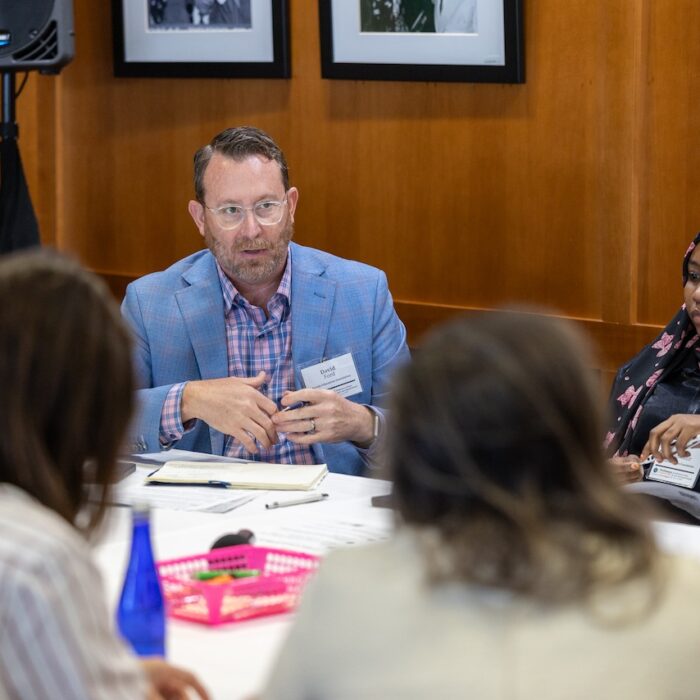
Reflections and Resources from the Pathways Action and Learning Summit
The State of Generation Z: A Generation Ready to Lead and How Purposeful Pathways Can Make It Possible