
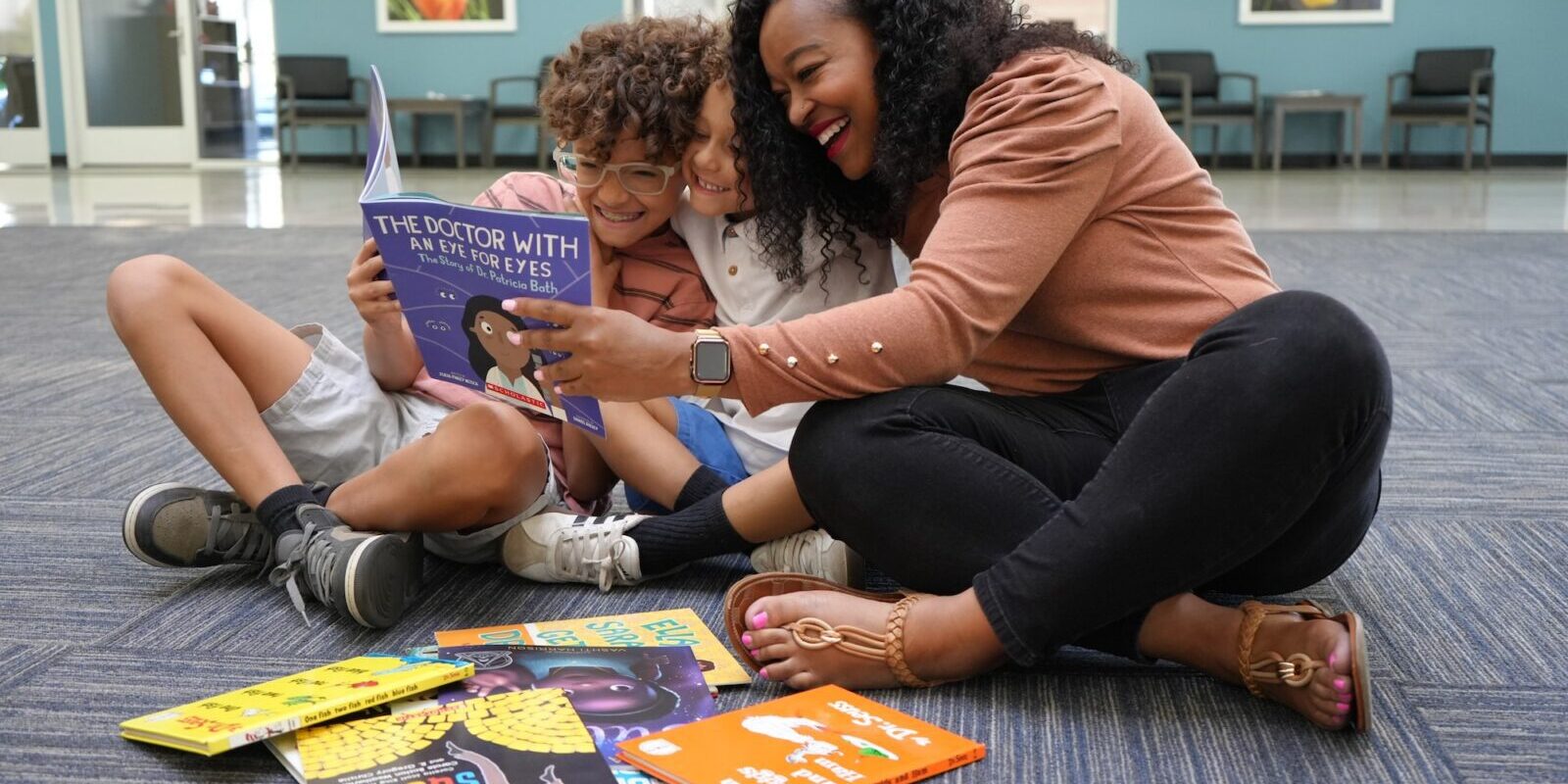
How Cradle to Career Muncie aligned schools, community partners and data to drive measurable gains
In Muncie, Indiana, educational attainment has long been closely tied to economic opportunity and the strength of the community as a whole. As workforce demands increasingly require education or credentials beyond high school, gaps in attainment have limited access to living-wage employment and upward mobility for many residents.
Income data illustrates the urgency of this challenge. The median annual income in Muncie is $45,910, well below what is needed to meet the basic cost of living for families. Early grade reading plays an important role in long-term success because students who read well in the early grades are more likely to stay on track in school, graduate and be prepared for work. Improving literacy early helps students build skills that support future earnings and economic stability for their families and the community.
In response to these conditions, Muncie launched Cradle to Career Muncie (C2C Muncie), a place-based partnership serving Delaware County, Indiana, concentrating its work in 14 Census tracts, or defined neighborhood areas used to understand community data, within Muncie. C2C Muncie works as a community backbone to align resources and action across the full educational continuum, from kindergarten readiness through postsecondary success and career employment. The partnership brings together school leaders, higher education institutions, nonprofits, employers, faith leaders and neighborhood partners around a shared belief that coordinated systems and shared responsibility are essential to improving outcomes at scale.
Within this, early grade reading emerged as a central priority. Children who fail to achieve reading proficiency by third grade are four times more likely to drop out of high school, limiting postsecondary opportunity and long-term economic mobility. “If our kids are not reading at grade level, they might find it difficult to find success in math, science or social studies,” said Heidi White, director of Elementary Education for Muncie Community Schools. “We embraced a comprehensive focus on literacy and invited everyone in — Ball State students, churches and volunteers — because it takes the whole community.”
Coordinated community action is producing measurable results. During the 2024-2025 school year, Muncie Community Schools increased early grade reading proficiency from 69.8% to 79.2%, a 9.4-percentage point gain that significantly outpaced statewide improvement. This improvement reflects the work of C2C Muncie and its coordinated, data-informed approach, which has aligned schools and community partners around early grade reading as a shared outcome.
 Aligning Instruction, Community Capacity and Data to Improve Early Grade Reading
Improving early grade reading in Muncie required more than a single program or short-term intervention. The community approached literacy as a systems challenge that required coordinated action across schools, community partners, funding, and data. C2C Muncie played a central role in bringing these elements together and aligning them around a shared early grade reading outcome.
A key strategy was instructional alignment within Muncie Community Schools. District leaders determined that existing literacy practices were not consistently building the foundational skills students needed to read proficiently. In response, the district accelerated a shift to instruction aligned with the Science of Reading, emphasizing phonics, phonemic awareness, fluency, vocabulary and comprehension.
This evidence-based approach created consistency across classrooms and ensured that all students received instruction grounded in research on how children learn to read. Strong alignment across district leadership and community partners allowed Muncie to implement this shift ahead of Indiana’s statewide mandate, enabling the district to focus on quality implementation rather than initial compliance.
Dr. Chuck Reynolds, director of public education and CEO of Muncie Community Schools, said the shift was intentional and system wide. “As a district, we made a deliberate decision to systemize the science of reading across all elementary schools so every student receives consistent, evidence-based literacy instruction. This work is not about a single program but about aligning curriculum, professional development, instructional practices and data systems around what research tells us works best for early readers.”
At the same time, the strategy expanded learning beyond the school day. Recognizing that students spend most of their time outside the classroom, Muncie Community Schools and Cradle to Career Muncie worked together to engage community partners in supporting literacy development. Heart of Indiana United Way, which leads the Third Grade Reading Collaborative Action Network (CAN), along with Ball State University practicum students, faith-based organizations and out-of-school-time providers were invited into a more coordinated role, offering targeted literacy support that reinforced classroom instruction rather than operating separately from it.
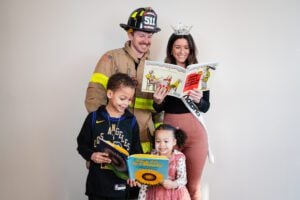 “Schools can’t do this work alone,” said Kortney Zimmerman, vice president and chief program officer at the George and Frances Ball Foundation and backbone staff for Cradle to Career Muncie. “Students are awake about 6,000 hours a year, and only 1,000 of those hours are spent in school. Our focus has been on how the community comes alongside what’s happening in classrooms, so learning is reinforced everywhere students spend their time.”
C2C Muncie also focused on building shared understanding and urgency amongst schools, community organizations and local leaders. Community leaders and partners participated in site-based learning with other communities, implementing large-scale grade-level reading strategies that were modeled after Read by 4th in Philadelphia and fellow StriveTogether network community partner, Higher Expectations for Racine County in Wisconsin. These experiences helped partners see how evidence-based instruction, public visibility and coordinated action can accelerate progress, reinforcing early literacy as a community-wide priority rather than a school-only initiative.
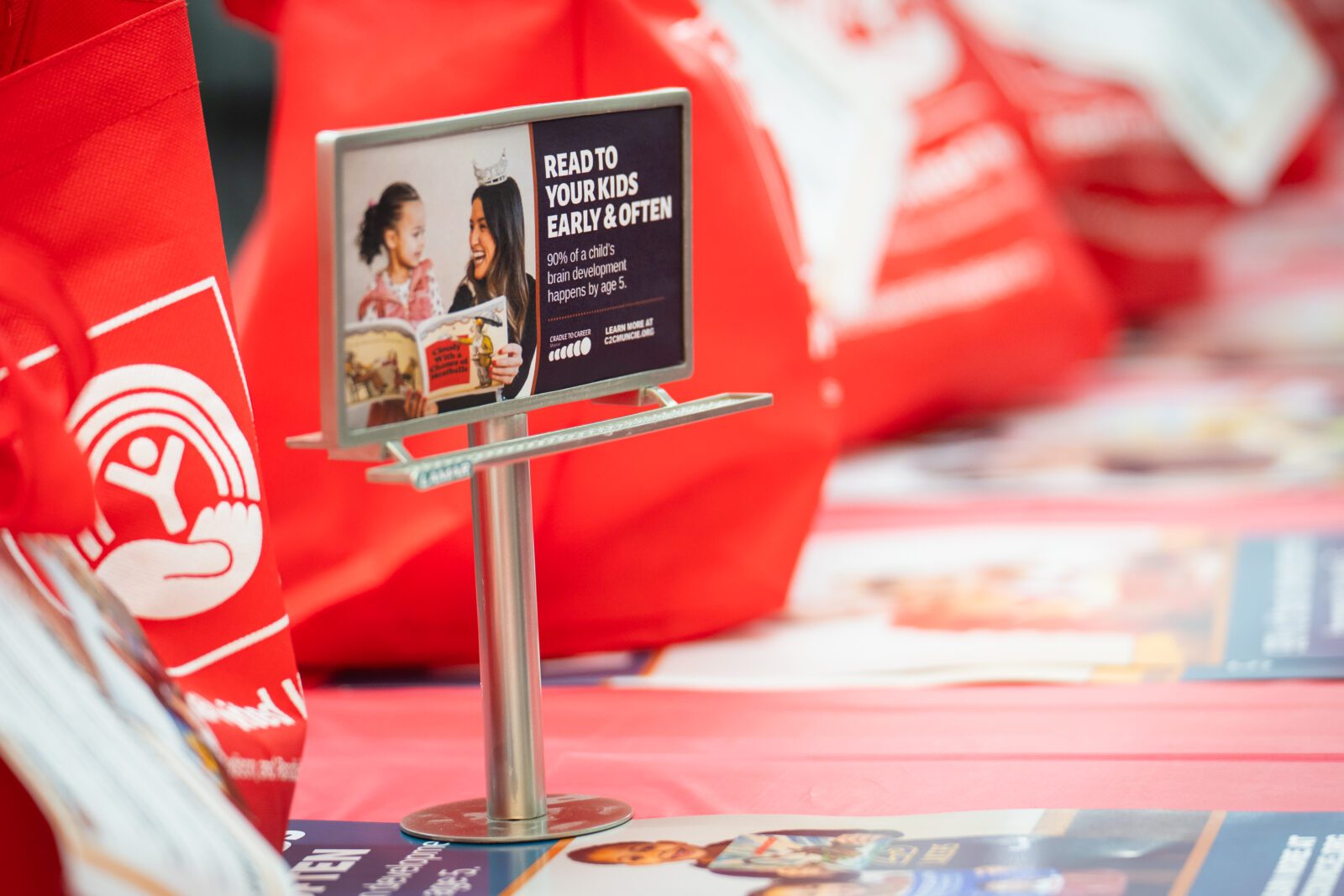
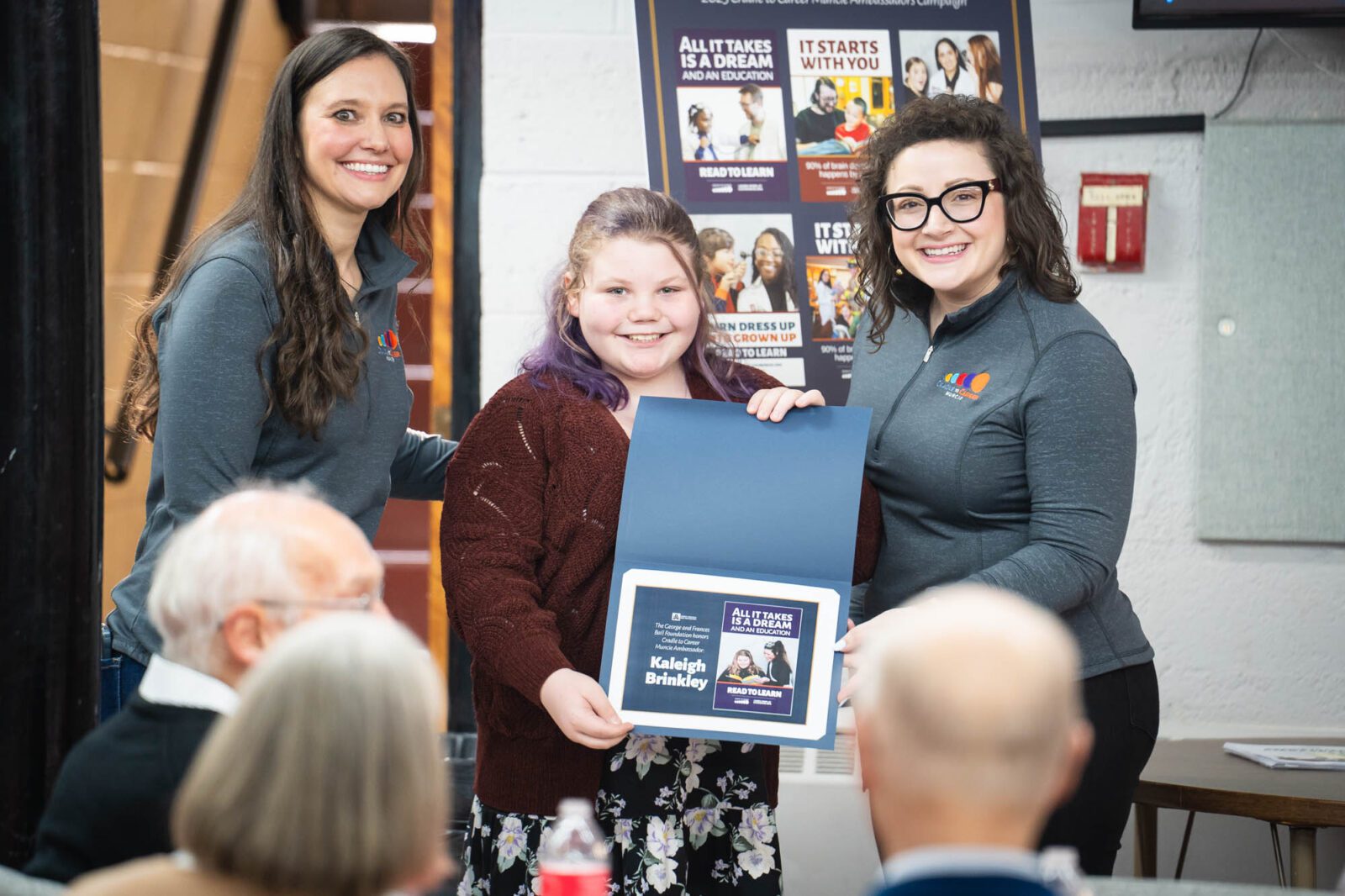
The strategy extended beyond instruction into community culture. Public-facing literacy efforts, including posters and billboards featuring local educators, families and students, reinforced reading as a shared community value. By making literacy visible across the city, the partnership helped normalize shared responsibility for early learning and strengthen public ownership of outcomes.
Dr. Reynolds said the approach reflects a broader understanding of how students learn. “Our cradle-to-career approach recognizes that literacy and learning do not happen in isolation during the school day. By mobilizing out-of-school partners, including universities, nonprofits, faith-based organizations and community volunteers, we are reinforcing literacy skills and academic growth wherever students live, learn and spend their time. This coordinated, communitywide effort strengthens outcomes and reflects our shared responsibility for student success.”
Data guided the strategy. C2C Muncie decided to place a dedicated data team within Muncie Community Schools rather than at the partnership backbone. This structure reduced barriers to accessing student-level data and supported faster, more coordinated decision-making across schools and community partners. The data team tracked early grade reading outcomes alongside attendance, student mobility and participation in out-of-school programs, allowing partners to see how supports inside and outside the classroom worked together.
Data showed that students moved between schools within the district at nearly five times the state average. This high level of movement disrupted learning and made it harder for early readers to stay on track. In response, the district implemented a uniform instructional schedule across elementary schools so students would receive consistent literacy instruction even if they changed schools. This adjustment reduced learning disruption and reinforced continuity across the system.
Together, aligned instruction, expanded community capacity and shared data infrastructure created the conditions for measurable improvement. Early grade reading became a demonstration of how coordinated systems can drive stronger outcomes.
 From Early Literacy Gains to Long-term Systems Change
The coordinated strategies to improve early grade reading in Muncie led to clear, measurable results during the 2024–25 school year. Muncie Community Schools increased early grade reading proficiency from 69.8% to 79.2%, a 9.4-percentage point gain that significantly outpaced statewide improvement.
Several elementary schools posted especially strong gains, demonstrating that improvement reached students across the district. Grissom Elementary School showed the largest improvement, increasing its third grade reading proficiency rate from 46.6% in 2024 to 79% in 2025. Other schools also reached high levels of proficiency, including West View Elementary at 75.5%, East Washington Academy at 82.3%, and Longfellow Elementary at 67.9%.
The scale and speed of this progress earned statewide recognition. The Indiana Secretary of Education publicly recognized Muncie Community Schools as one of a small number of districts showing significant improvement in third grade reading outcomes. State officials noted that while Indiana’s literacy rates increased by nearly five percentage points statewide, Muncie exceeded that pace.
These outcomes reflect strong instructional improvement and system functioning. Consistent literacy instruction across elementary schools reduced disruption for students who moved during the school year. Alignment between classroom instruction and community-based supports increased opportunities for students to practice reading skills throughout the day. Together, these changes created conditions for sustained improvement rather than one-time gains.
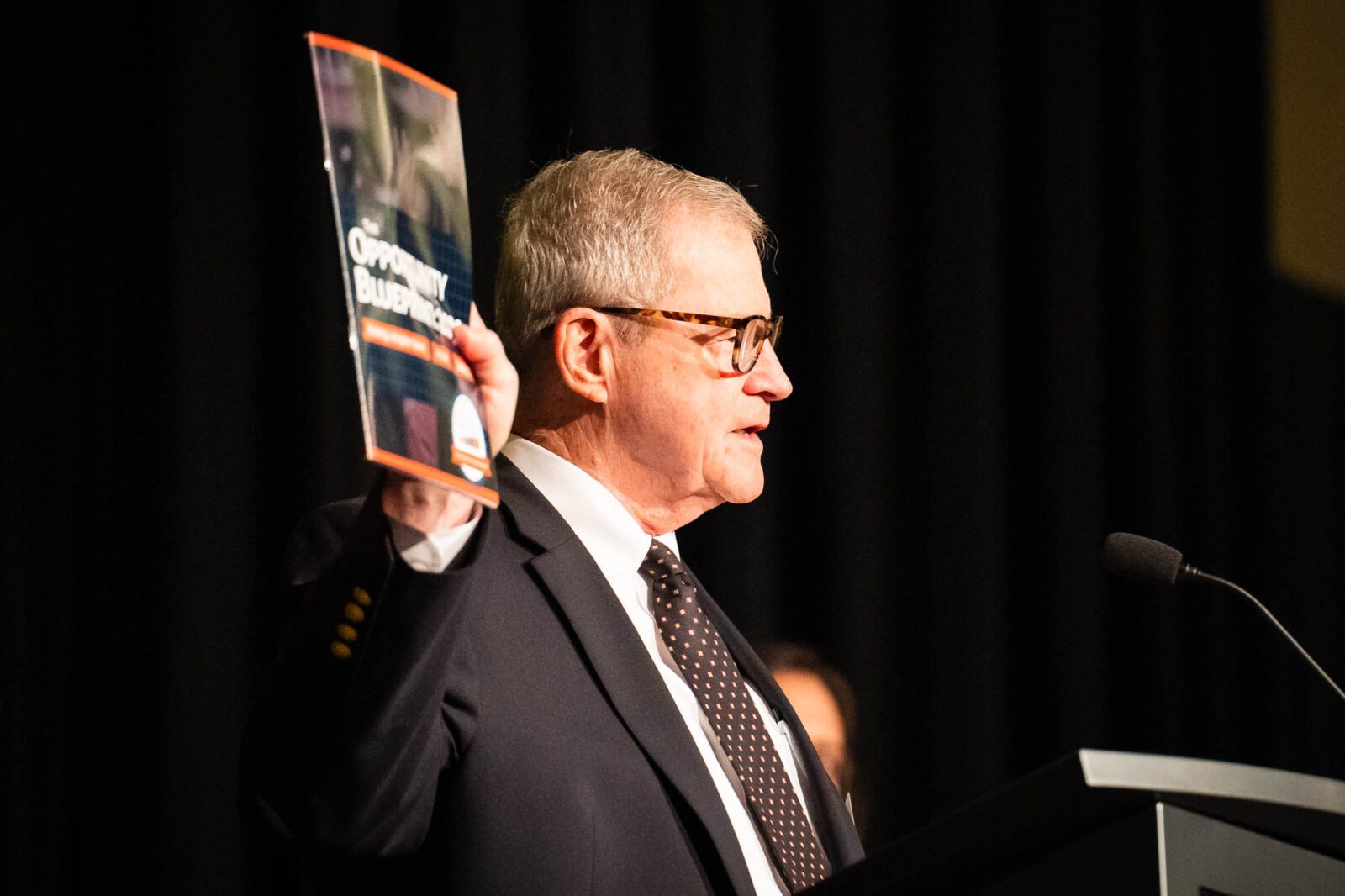 Building on Results: The Opportunity Blueprint 2030
Early grade reading gains are part of a broader, long-term strategy to strengthen educational opportunities across the community. In partnership with the George and Frances Ball Foundation, C2C Muncie launched The Opportunity Blueprint: 2030, a five-year strategic plan built by the community, for the community. Developed with input from more than 150 local stakeholders, The Opportunity Blueprint: 2030 offers a shared roadmap for improving cradle-to-career outcomes while supporting Muncie’s long-term economic vitality.
The Opportunity Blueprint: 2030 is designed to both reduce generational poverty and transform the local economy by aligning education, workforce development, and community supports. The plan combines high-quality educational preparation, career exploration across the lifelong learning journey, and comprehensive wraparound supports to help students and families thrive both academically and economically.
This progress marks the next chapter of C2C Muncie, building on transformative work that began in 2018. In just five years, the partnership has achieved several key systemwide wins:
- Muncie Community Schools stabilized student enrollment at Muncie Community Schools
- Secured more than $15 million in funding from local philanthropies and national funders
- Completed family engagement assessments across all district schools
- Muncie Community Schools’ Board of Directors supported a 40% increase in teacher pay
- Muncie Community Schools improved teacher retention by 10%, strengthening instructional continuity for students
Research from the Brookings Institution shows that communities like Muncie see stronger results when they build on existing strengths and lead their own economic strategies. The Opportunity Blueprint: 2030 follows this approach by focusing on local leadership, shared data, and collaboration across sectors.
Within The Opportunity Blueprint: 2030, early grade reading serves as a foundational outcome, an early indicator of whether systems are aligned and working effectively together. By embedding literacy improvement within a broader strategy for educational attainment and workforce readiness, The Opportunity Blueprint: 2030 ensures that early gains contribute to long-term economic mobility for students, families, and the community.
Accelerating What Works Through Local Leadership and Network Learning
The progress in early grade reading in Muncie reflects what is possible when communities align around shared outcomes and use data to guide action. Through coordinated instruction, expanded community supports and strong partnership infrastructure, Muncie Community Schools and Cradle to Career Muncie achieved measurable gains that outpaced statewide improvement and strengthened the foundation for long-term success.
These results are part of a broader systems strategy rooted in local leadership and reinforced through national learning. Participation in the StriveTogether Cradle to Career Network has helped C2C Muncie move faster by learning from peers, adapting proven strategies and strengthening civic infrastructure to support continuous improvement.
“Being part of the StriveTogether Network has been critical because we’re learning from communities that have been doing this work for 20 or 30 years,” said Kortney Zimmerman. “We don’t have to start from scratch, we can learn what’s worked, adapt it and move faster.”
As Muncie looks ahead, The Opportunity Blueprint: 2030 provides a shared roadmap for sustaining and expanding this momentum. By embedding early grade reading within a long-term strategy to improve educational attainment and economic mobility, the community is positioned to build on current gains and drive lasting change.
Together, Muncie’s experience demonstrates how communities can use coordinated systems, shared data and network learning to improve outcomes for students and families, and how early literacy can serve as a powerful starting point for broader community transformation.