
In Kent County, Michigan, community leaders share a clear goal: to ensure that all young people in Kent County graduate from high school ready for whatever comes next.
High school graduation is one of the most important milestones on the path to opportunity and economic mobility. Students who earn a diploma are more likely to enroll in college, build stable careers and contribute to thriving communities. In 2024, according to the U.S. Bureau of Labor Statistics, adults with a high school diploma earned roughly $48,000 per year, compared to about $38,000 for those without one. On average, high school graduates earn about $10,000 more annually than individuals who do not complete high school.
Over the past decade, Kent County has made progress toward increasing high school graduation rates. In 2024, 87% of students graduated from high school on time, up from about 78% in 2013. Hundreds more students each year are crossing this important milestone and stepping into their futures.
Behind that progress is a network committed to creating the best conditions for children and families to thrive in Kent County. KConnect, part of the StriveTogether Cradle to Career Network, brings together partners across Kent County to help ensure all children and families have the opportunity and support to thrive,
Since 2013, this backbone organization, which helps coordinate and align partners, has brought together leaders across education, housing, employment and community services to address inequities. Through action teams, KConnect builds on what is working in Kent County and develops strategies to address gaps. This work shows what is possible when communities come together around shared goals and solutions.
 Building a community that supports high school graduation
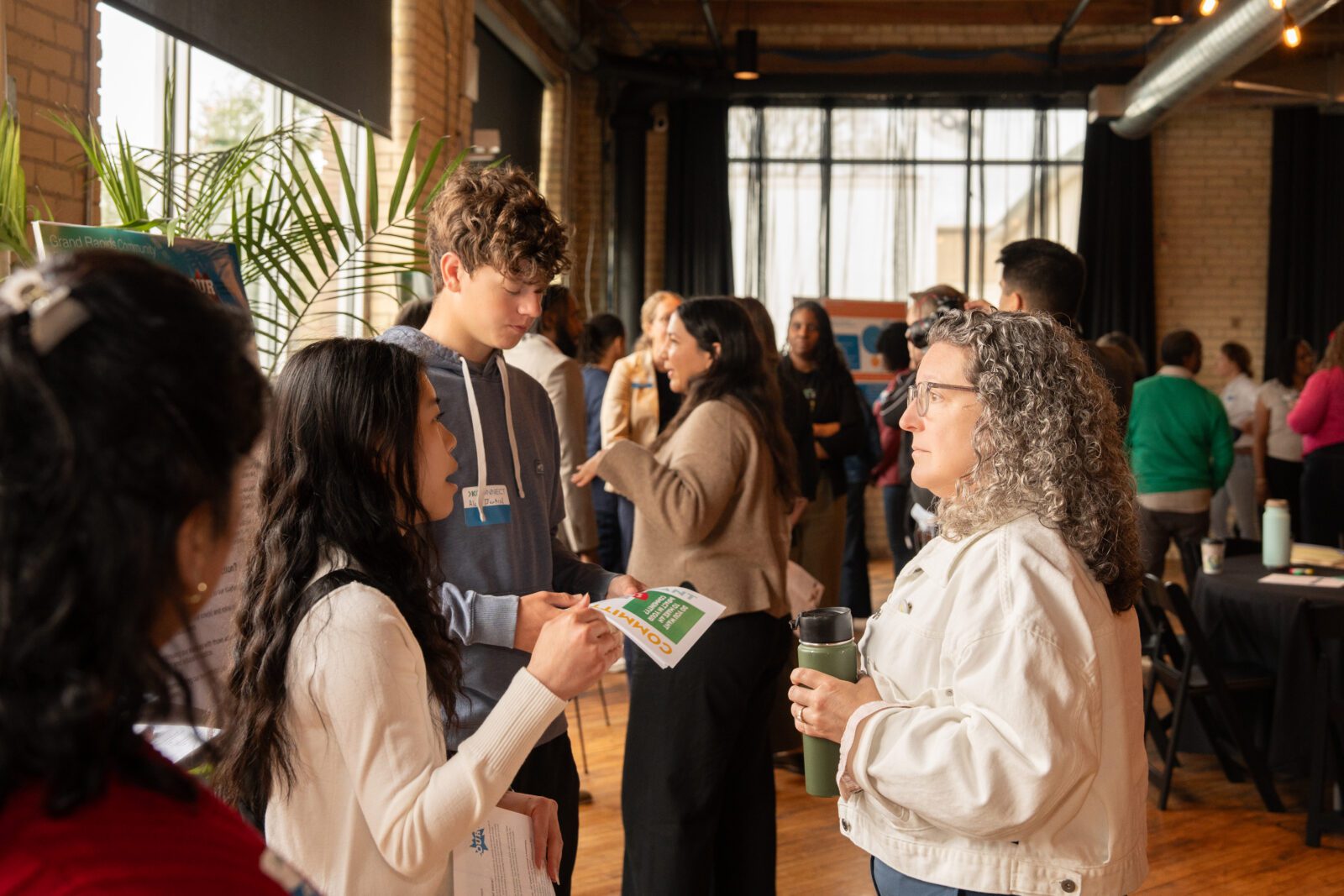
Graduating from high school requires more than strong schools; it takes an entire community working in partnership. KConnect brings together more than 250 organizations across Kent County, including schools, colleges, employers, nonprofits and local government, all collaborating to support students and families.
By sharing data, partners gain a better understanding of student needs and identify where the system can improve. This collective insight helps identify barriers and guide solutions that keep students on the path to graduation.
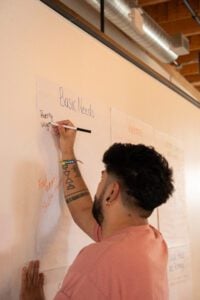
The data also shows where gaps remain. In 2024, graduation rates were nearly 93% for Asian students and just over 92% for white students. For Black students, the rate was about 76%, and for Latine students it was nearly 82%. Closing these gaps is a top priority. KConnect works with schools and community groups to tackle the things that affect whether students stay in school and graduate, including access to caring teachers, stable housing and clear paths to careers.
 Improving Systems that Impact Student Success
KConnect focuses on changing the systems that shape students’ opportunities. One key strategy is building a more diverse teaching workforce. Their 360 Degree Diverse Educators Model is a system-level strategy used to close the racial disparity gap among educators of color in Kent County. Research shows that students do better when they have teachers who look like them and understand their experiences. Countywide efforts are showing rewards, with the number of Black educators up 35% and Latine educators up 30% over the past seven years.
 When students feel connected and supported, they are more likely to stay engaged, on track academically and graduate on time.
In addition to what happens in the classroom, KConnect’s continuum of work emphasizes a systems approach. The network’s expertise ensures a comprehensive response to the wide-ranging needs of students and families. Stable and affordable housing is a major need: when families face housing instability, students’ academic performance and attendance are threatened.
To address this, KConnect helped launch Housing Kent, a regional effort to expand affordable housing. When families have a stable place to live, students are more likely to attend consistently, stay engaged and successfully graduate from high school.
On attendance, KConnect brought together school district leaders, community partners and experts to establish a standard definition of chronic absenteeism. The group researched national best practices, developed a shared language and launched a systemwide communications strategy. KConnect continues to track this data, report regularly and collaborate on targeted projects to address attendance challenges.
 Connecting High School Graduation to Real Opportunity
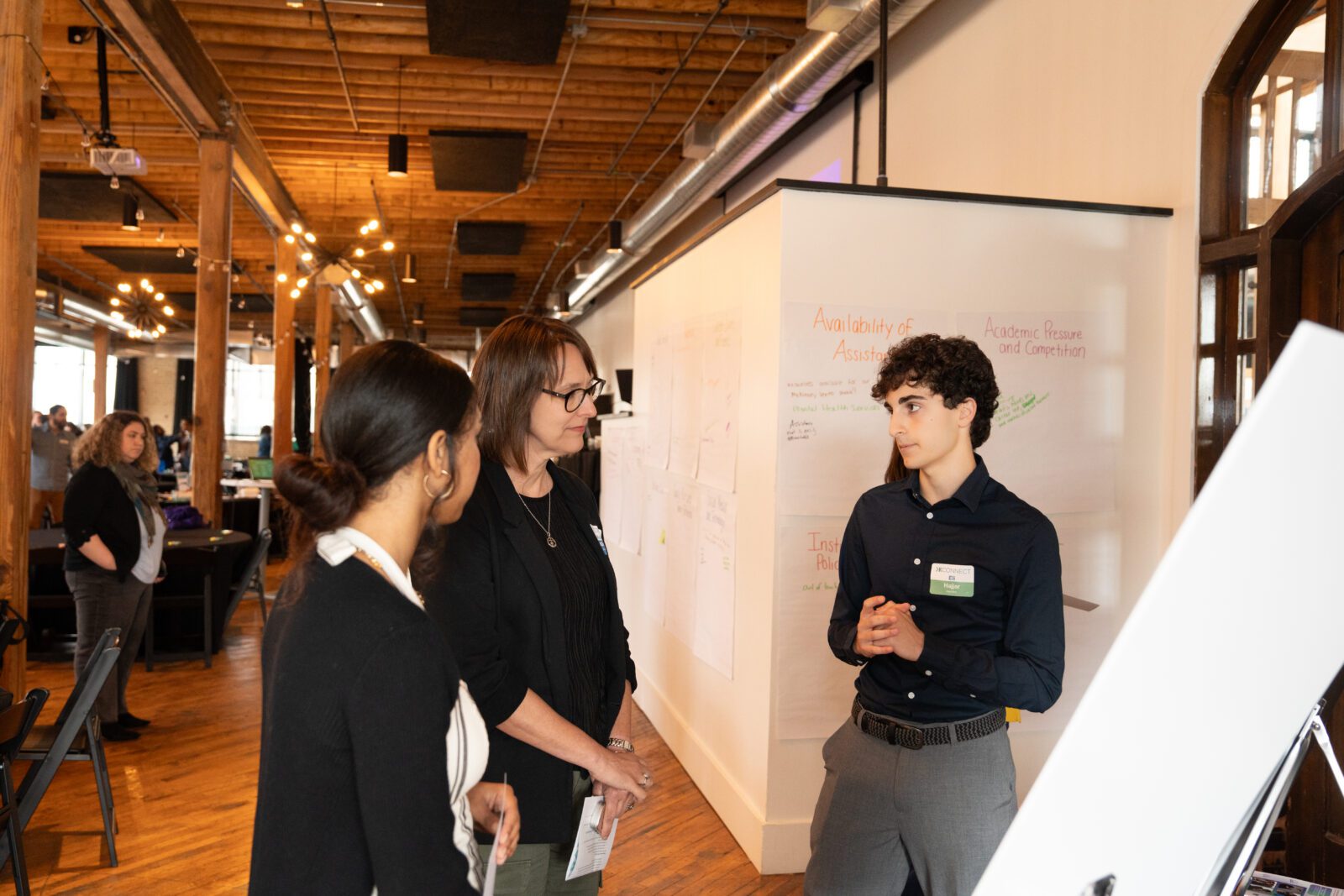
In Michigan, attending college or a trade program after high school can significantly affect long-term earning potential, yet many students struggle to afford it. In Kent County, local partners have been working to change that trajectory. As a result, more than 62% of the class of 2022 enrolled in postsecondary education and nearly 57% of students completed a program by 2023, the highest rate in over a decade.

To help even more students get there, KConnect helped champion the Michigan Community College Guarantee. This policy provides recent high school graduates with up to two years of tuition-free community college. Since launching in fall 2024, the program has helped boost enrollment at community colleges across Michigan. In Kent County, partners are also offering transportation, child care and coaching to help students stay enrolled and complete their programs.
KConnect’s Shared Policy Agenda centers on key priorities that address structural barriers and expand opportunities for students on the path to high school graduation. These priorities strengthen conditions that make success possible, while aligning state investment with community strategy, including:
- Increased FAFSA completion: Assisting more students to access financial aid and postsecondary opportunities
- Comprehensive school-based supports: Coordinating academic, social and basic needs to keep students on track
- Equity in K-12 funding: Fully funding the Opportunity Index to direct resources where students need them most
The rise in Kent County’s high school graduation rates reflects years of teamwork and shared responsibility. As more students finish school on time, pursue college or career training and build pathways to economic stability, the benefits extend across the region.
“Improving student outcomes isn’t the work of a single organization. It takes a cross-sector effort,” said Salvador López, president and CEO of KConnect. “By sharing data, aligning strategies and working together, school districts, community organizations and partners can identify barriers, strengthen systems and create opportunities that keep students on track to graduate and thrive.”
Supporting students through graduation and beyond not only strengthens our workforce but also opens doors to opportunity for the next generation.