
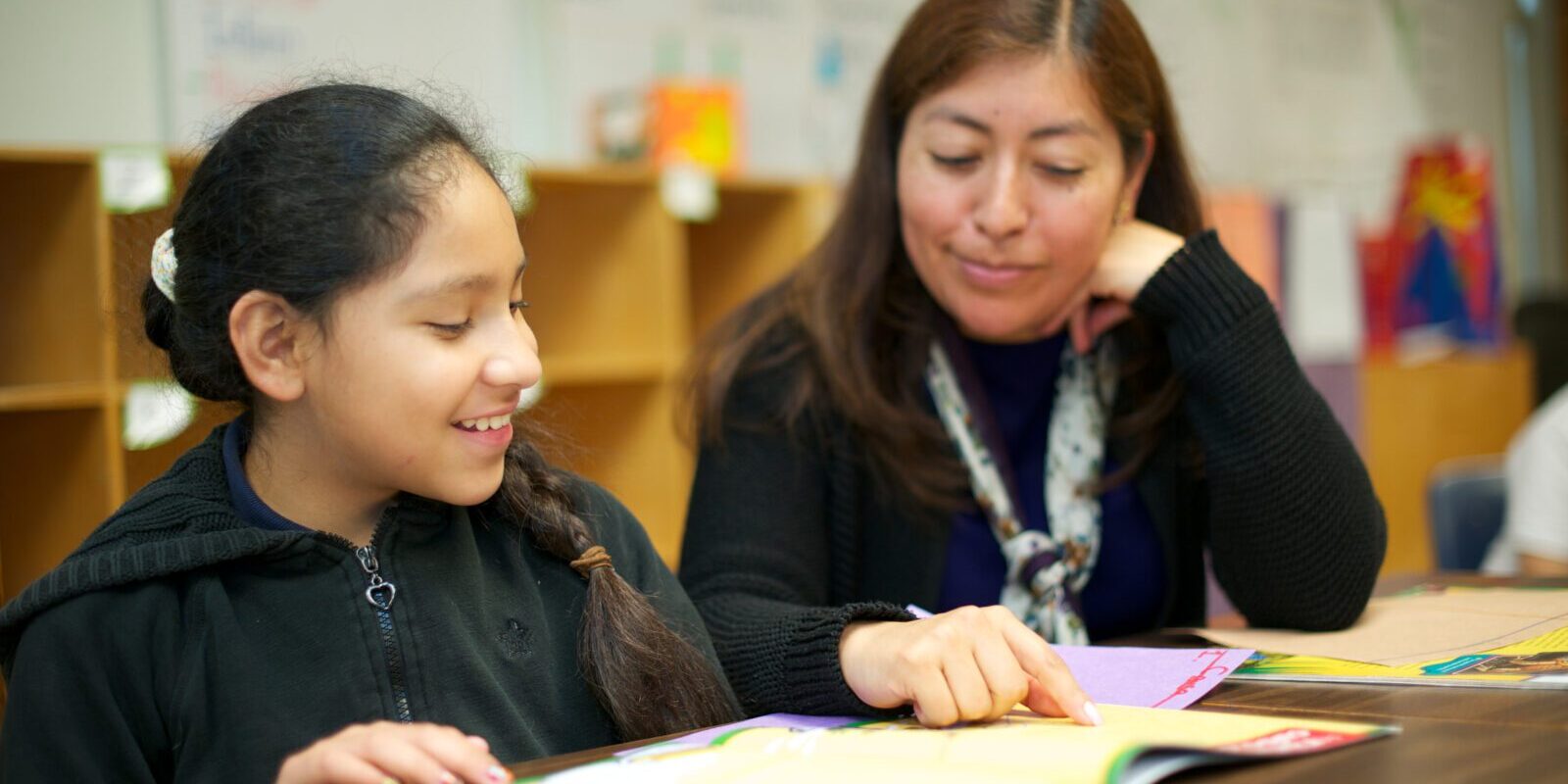
At the start of kindergarten, many students are just beginning to recognize letters. Some are learning to write their names for the first time. By the end of the year, many of those same students are reading sight words, writing complete sentences and participating with confidence. The change is measurable and meaningful.
For Sabrina Mayberry, that growth reflects what early literacy makes possible. “I’ve been a kindergarten teacher for 28 years,” says Mayberry of DeSoto Independent School District. “Early grade reading is so important because it sets the foundation for everything.” After nearly three decades in the classroom, she has seen how learning to read builds confidence and shapes long-term success. When students leave her classroom as readers, she knows their world has expanded.
Reading proficiency by third grade is one of the strongest predictors of later educational and economic success. Yet nationally, progress remains limited. In 2024, just 31% of fourth-grade students performed at or above proficient in reading on the National Assessment of Educational Progress, a decline from both 2022 and 2019.
The consequences are long term. Students who read proficiently by third grade are four times more likely to graduate from high school. A diploma is closely tied to higher lifetime earnings, lower unemployment and greater economic opportunity. National research estimates that the nation could be losing up to $2.2 trillion annually due to low adult literacy rates.
In Dallas County, leaders understand that early literacy is both an academic milestone and a pathway to economic mobility. The Commit Partnership, the StriveTogether Cradle to Career Network member serving Dallas County, brings together school districts, higher education institutions, policymakers, nonprofits and business leaders around a shared goal: increasing economic mobility for young people. Its North Star is clear. By 2040, at least half of Dallas County young adults will earn a living wage, regardless of race, place or family income. That pathway begins with early reading.
“Early grade reading is a critical component to economic mobility,” says Abby Mayer Eelsen, chief operating officer at the Commit Partnership. “Students who are reading on grade level by third grade are more likely to graduate high school on time and enroll in postsecondary education.”
 Strengthening Systems to Drive Results
In Dallas County, the data shows both progress and opportunity. For the 2020 pre-K cohort, Dallas County enrolled a higher percentage of eligible 3- and 4-year-olds in pre-K than the state average. That is a meaningful win. High-quality pre-K strengthens kindergarten readiness and builds the early language and literacy skills that support third grade reading success. A longitudinal study published in the International Journal of Child Care and Education Policy found that kindergarten readiness predicts reading, math and science outcomes through at least fifth grade.
When the 2020 pre-kindergarten cohort reached third grade in 2024, reading results underscored the importance of pairing access with strong instruction and early intervention. Expanding opportunity in the early years lays the foundation. Sustaining growth requires consistent, high-quality literacy support.
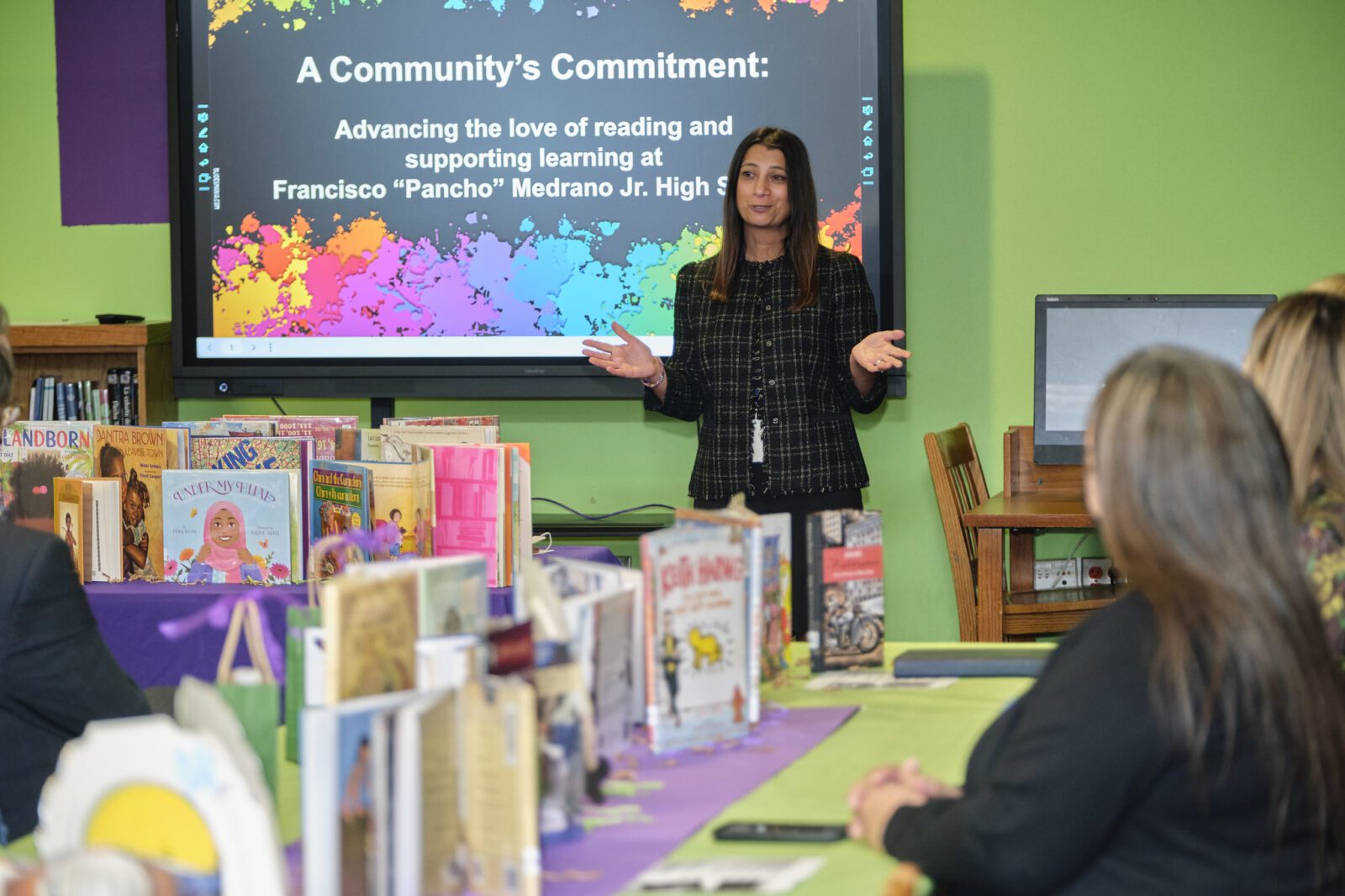
 As the backbone organization for Dallas County, the Commit Partnership aligns partners around shared data and shared goals. School districts, early learning providers and community organizations review literacy screening results together and examine outcomes by campus, race and income. This shared work helps leaders see where students are thriving and where additional support is needed.
In DeSoto Independent School District, leaders saw that while strong instruction existed in some classrooms, it was not consistent across the system. Stephanie McCloud, chief academic officer, explained that the district had not fully aligned expectations around foundational skills. “We saw pockets of success, but it wasn’t a system of success,” she said. “We knew our infrastructure needed to be adjusted and there were gaps we needed to fill.”
The Commit Partnership supports districts through regional learning networks focused on early literacy. Leaders visit classrooms, examine instructional practices and strengthen professional learning for teachers. Instead of isolated efforts, districts build consistency around evidence-based literacy instruction. The goal is alignment across classrooms so that every student receives high-quality foundational reading support.
By aligning curriculum, strengthening coaching and using data to guide small group instruction, the district built greater consistency across campuses. The results followed. From 2024 to 2025, DeSoto saw a 12-percentage-point increase in third grade reading performance.
Leaders knew that improvement would only last if the systems behind it were strong. Amber Shields, managing director of Early Learning and Leadership at the Commit Partnership, explained that lasting progress requires more than a single win. “To sustain our early literacy efforts, we knew that it was bigger than a one-time initiative,” she said. “It was important to prioritize not only improving instructional quality but also monitoring and measuring the implementation of the systems that support improving early literacy.”
The priority was ensuring that strong instruction was matched by systems that support teachers with consistency and clarity.

Advancing Policy to Expand Opportunity
Local progress and state policy work has also helped to expand opportunity for young learners.
In recent years, Texas has passed major legislation focused on early literacy. In 2019, House Bill 3 expanded access to high-quality pre-K and required science-of-reading training for teachers. In 2023, House Bill 1605 increased access to high-quality instructional materials aligned to evidence-based reading practices. Most recently, House Bill 2 required literacy and numeracy screening in grades K-3 and mandated intervention for students who are off track.
These policies elevated early literacy as a statewide priority and increased focus on the earliest grades. Bridget Worley, chief state impact officer at the Commit Partnership, has seen that shift firsthand. “These policies have really driven school systems to put a lot of effort and focus on their early grades where it might not have been a primary focus in the past,” she said. “And we have seen that have an impact on student results.”
In the 2024–2025 school year, 43% of Dallas County third graders met grade level on the State of Texas Assessments of Academic Readiness (STAAR) third grade reading exam, up four percentage points from the previous year and twelve since 2021.
This progress follows a countywide focus on foundational literacy, including strengthening the implementation of high-quality instructional materials and supporting consistent instruction across classrooms.
The Commit Partnership advances this work through strong local alignment and coordinated state policy efforts. Its policy strategy relies on a statewide coalition of members, one of whom is also part of the StriveTogether Cradle to Career Network, E3 Alliance. Partners like E3 understand their regional context and operate as backbone organizations, similar to Commit. Together, they bring their resources and expertise to approach state policy in a collective way.
 From Early Reading to Economic Mobility
Students who read proficiently by third grade are more likely to graduate from high school, enroll in postsecondary education and complete a credential, which are all important steps toward earning a living wage as an adult. Progress in early literacy strengthens the foundation for learning in math, science and writing and prepares students for success in the middle grades and beyond.
The Commit Partnership connects early literacy to a broader early-childhood-through-12th-grade strategy that supports students from pre-K through high school graduation and into college and careers. Through its role in the StriveTogether Cradle to Career Network, the Commit Partnership strengthens this work as part of a national movement focused on improving key milestones linked to long-term success. The Network helps communities align partners, sharpen data systems and scale effective strategies so that more young people can reach outcomes that matter most for lifelong opportunity.
For Abby, the value of that partnership is clear. “The StriveTogether Cradle to Career Network has been an invaluable partner to the Commit Partnership since our founding in 2012,” she said. “The resources provided to partner organizations help us set our goals in alignment to cradle-to-career outcomes, monitor and track data and hold ourselves accountable to our students and our community.”
That shared accountability keeps the focus on results. It takes shape through effective teachers, informed leaders and community partners working toward common goals. It gains momentum as students reach milestones, supported by systems designed to guide success at every stage of their journey, cradle to career.