
For years, Promise Partnership Utah has been working to improve outcomes for young people across the state. As a place-based partnership, they help align partners around shared goals, connect data across systems and support communities in building solutions that last. Their work focuses on key milestones like early literacy, middle grade math and postsecondary pathways, tracking progress across cradle-to-career indicators tied to education, health and economic mobility.
Across Utah, like many states, too many students still face barriers to reaching those milestones. Outcomes can vary by student groups and by community, and systems designed to support children and families are not always connected. Promise Partnership Utah has worked to close those gaps by bringing partners together to use shared data, align strategies and focus on what works.
In March 2026, on the final day of Utah’s legislative session, that work reached a major milestone. Senate Bill 165, Economic Mobility Initiative, passed, establishing the Raising Expectations through Accountability, Community and Hope (REACH) Initiative. This is a statewide effort to support place-based partnerships that align education, health and workforce systems, use shared data and improve outcomes for children and families.
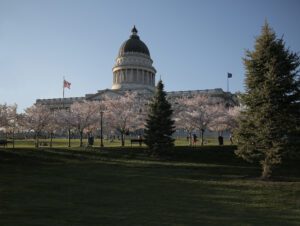 “The REACH Initiative will help communities across Utah build the infrastructure necessary to give every child the opportunity to thrive,” said Amy Ahrens Terpstra, managing director for Promise Partnership Utah.
The legislation creates an initiative to support community-based partnerships. It requires the Governor’s Office of Economic Opportunity to designate a statewide technical assistance provider and establishes requirements for cross-sector collaboration, shared data and transparent reporting to track progress across key indicators like third-grade reading, high school graduation and employment outcomes.
Designed to reach more than 200,000 youth across urban, suburban, rural and tribal communities in Utah, the initiative aims to improve academic achievement, strengthen workforce pathways and increase long-term economic mobility while reducing intergenerational poverty. It also creates a foundation to align and leverage public and philanthropic investments around shared outcomes, helping ensure resources are used more effectively across systems.
Promise Partnership Utah played a key role in bringing this vision to life, working alongside partners and policymakers to ensure the legislation reflects both community needs and what works in practice.
 Building the Foundation
This moment was years in the making. Long before SB 165 moved through the legislature, partners across Utah were already doing the work. Communities were coming together to better support children and families, building relationships across schools, nonprofits, health systems and local leaders. They were aligning around shared goals, using data to guide decisions and working to improve outcomes from cradle to career.
In Salt Lake, this approach has already led to measurable progress. The region’s four-year graduation rate increased from 85.0% in 2018 to 86.3% in 2024. At Cottonwood High School, graduation rates for refugee students increased from below 50% in 2012–13 to 94% in 2023–24, surpassing their peers and demonstrating what is possible when systems align around student needs.
Partners also expanded access to early childhood education through the state’s first education-focused pay-for-success project, demonstrating that high-quality preschool increases kinder readiness for all children, especially those experiencing poverty. That evidence helped secure ongoing state funding. Today, between 2,000 and 3,000 children benefit each year from publicly supported, high-quality preschool. In 2023, the Partnership was also instrumental in passing a bill that ensures access to full-day kindergarten for every Utah family who wants to enroll their child. Since that legislative win, full-day kindergarten enrollment has increased statewide from 34% to 91%.
This work showed what is possible and why expanding this approach statewide matters, but it also revealed a challenge. Even strong local partnerships can only go so far without broader alignment. Systems remained fragmented. Resources were not always coordinated. And scaling what worked in one community to others across the state remained difficult.
There had been earlier efforts to address this. A previous state investment, Partnerships for Student Success, supports some communities in building partnerships with schools, laying important groundwork. That investment has been instrumental in supporting
Community Schools infrastructure in Utah. A broader bill introduced in prior years, known as LEAP, aimed to build on this approach statewide by aligning systems and funding to support place-based partnerships, but it did not pass. Even so, the effort helped build awareness among policymakers, strengthen cross-sector alignment and inform a more refined approach that ultimately shaped the REACH Initiative.
 Turning Practice into Policy
SB 165 builds on that foundation. The REACH Initiative expands beyond a focus on schools alone to support coordination across multiple systems that shape outcomes for children and families. It creates a structure for identifying and supporting place-based partnerships across the state while setting the stage for future investment by aligning strategy and infrastructure.
To build the case, Promise Partnership Utah worked to get the legislature to fund a 2025 study on place-based efforts across the country and in Utah to understand what Utah should do to achieve better outcomes with state investments. The Kem C. Gardner Policy Institute, a University of Utah research institute that provides economic and public policy analysis, conducted the study. The resulting report, Educational Achievement and Workforce Development: A Review of Community Based Approaches, became the foundation for SB 165.
The report found that aligning schools, families and community organizations around shared cradle-to-career outcomes is a promising strategy to improve education, health and economic mobility for youth. It also highlighted that effective partnerships are grounded in shared accountability, cross-sector collaboration, data-driven continuous improvement and sustainable funding. In addition to examining models such as StriveTogether, Harlem Children’s Zone and Partners for Rural Impact, the study pointed to existing Utah efforts like Promise Partnership Utah, Promise South Salt Lake, Millcreek Promise and the Roy Cone Project as strong examples to build from.
 At the same time, Promise Partnership Utah worked to build momentum from the ground up. Through town halls across the state, including in rural communities, they engaged local partners, shared the vision and listened closely to community needs. They also brought funders into the conversation early, helping build alignment and support for a statewide approach.
They also stayed closely connected to state leadership. Through ongoing briefings with legislators, the governor and key agency leaders, they helped ensure the policy reflected both the vision and the practical realities of implementation.
StriveTogether supported this effort along the way, helping inform strategy and contributing to the research used to make the case for place-based approaches. The team also worked with national partners to build momentum and supported engagement with funders and state leaders to strengthen alignment.
Together, these efforts helped turn a complex idea into a shared priority and finally into policy.
From Passage to Possibility
The passage of SB 165 creates an opportunity to build the foundation needed for this work to grow. Early efforts are focused on strengthening statewide coordination, developing a technical assistance model and building data systems that allow communities to track progress and continuously improve. Maintaining access to shared data will be key, helping partners identify barriers, align strategies and stay focused on outcomes that matter for children and families.
This next phase is just as important as passage. The period between policy and implementation is when momentum either accelerates or stalls. Promise Partnership Utah is moving with urgency to ensure the REACH Initiative launches with strong foundations and a clear, coordinated path forward for communities across the state. Building on years of local progress, the Partnership worked alongside policymakers to help turn this effort into a statewide commitment to change.
Now, the work continues with greater alignment and shared purpose. Partners across Utah will continue working together to create stronger systems and better outcomes for children and families.