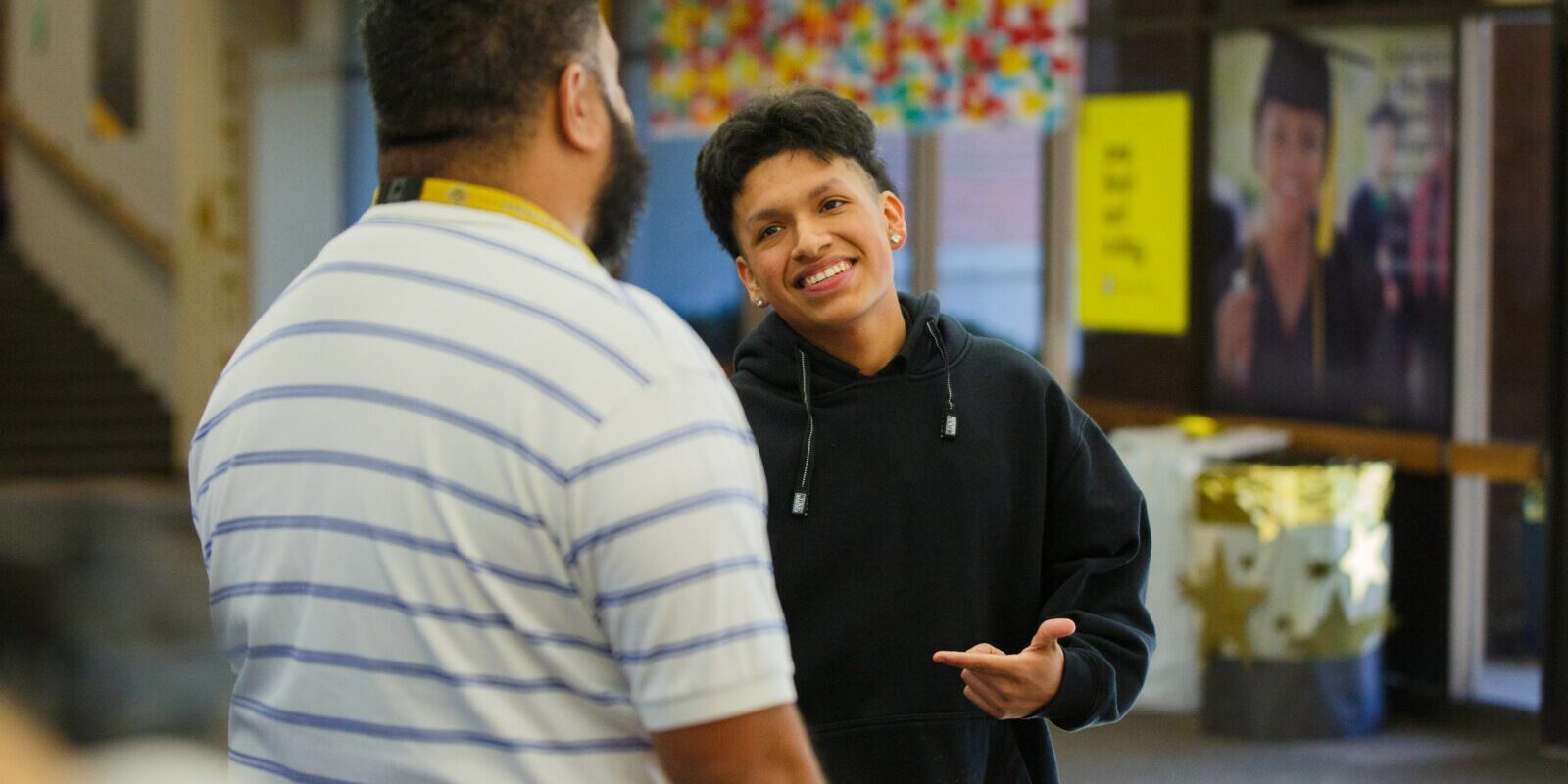
For a student like Hector, the commitment to graduation became real at Cottonwood High School. As a ninth grader, school did not feel connected to his future. Late nights made it difficult to sleep and Hector began missing class regularly. Over time, he grew disconnected from school.
Today, Hector is focused on graduation. He wants to walk across the stage. He wants to be the second person in his family to earn a diploma. He wants to create more opportunity for himself and for his younger brother. His progress reflects a coordinated strategy built on data, accountability and strong relationships designed to help students stay on track toward graduation.
 High school graduation is a critical milestone in a young person’s life. Adults without a diploma face higher unemployment and earn nearly $10,000 less per year than high school graduates. In 2024, adults with a high school diploma earned roughly $48,000 annually, compared to about $38,000 for those without one. Completing high school increases access to postsecondary education, technical training and stable employment and can significantly expand long-term economic opportunity for families.
In South Salt Lake and West Millcreek, Utah, community partners are working together to strengthen that outcome. Promise Partnership Utah is a place-based partnership in the StriveTogether Cradle to Career Network. It brings together schools, local government and community organizations to strengthen the path from early learning through high school graduation and into postsecondary education and career.
“High school graduation is critical for kids’ future economic success, but it’s not the destination. It’s the doorway that kids have to pass through in order to find economic mobility,” said Bill Crim, President and CEO of United Way of Salt Lake and a member of the Promise Partnership Council.
That belief shapes the 100% Promise. By 2028, partners have committed to ensuring that every student in South Salt Lake and West Millcreek graduates high school with a career plan and their basic needs met. It is a shared commitment to make outcomes like Hector’s possible for every student in the community.
 Data Drives Strategy
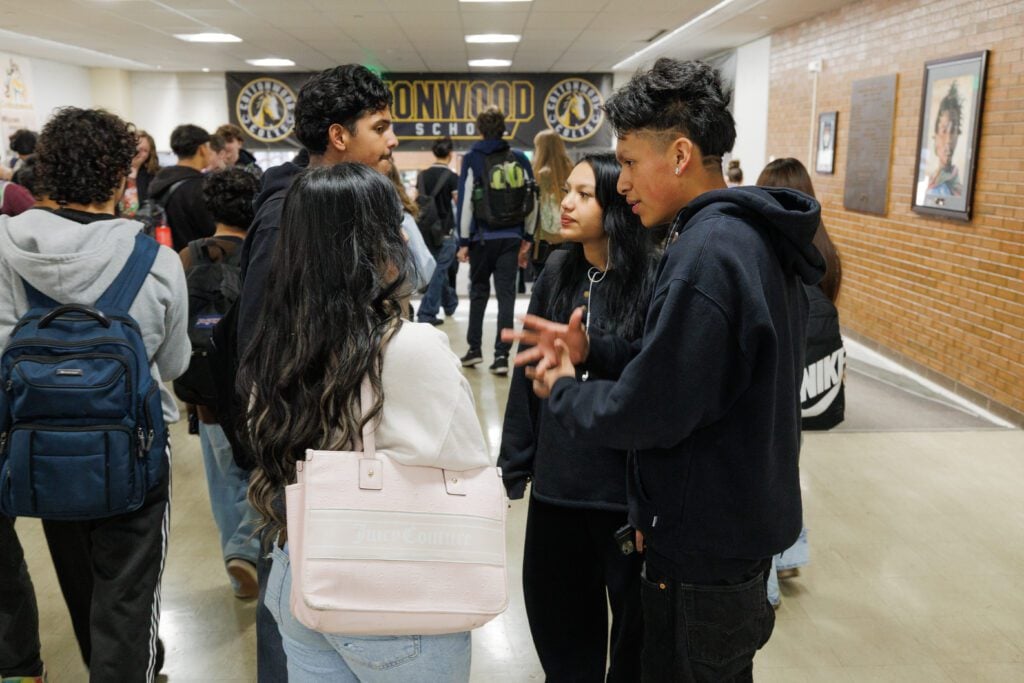
Across the Promise Partnership Utah region, the four-year graduation rate increased from 85% in 2018 to 86.3% in 2024. While graduation rates remained steady, leaders recognized that overall averages can hide differences among student groups and schools. At Cottonwood High School, leaders reviewed attendance trends, course completion data and subgroup outcomes to identify students who were beginning to fall off track. That analysis led to earlier and more targeted support.
“We know we can achieve it because we have done it with refugee students,” said Amy Ahrens Terpstra, managing director with Promise Partnership Utah. “Refugee students at Cottonwood High School now have a higher graduation rate than their non-refugee peers. One of the key strategies we’re pursuing is Promise Student Advocates.”
At Cottonwood High School, graduation rates for refugee students increased from 48% in 2012–13 to 94% in 2023–24, surpassing the rates of non-refugee students. That success shows what is possible when aligned systems and steady adult relationships work together to keep students on track toward graduation.
 The Role of Mentorship
Research from the National Library of Medicine shows that strong relationships with caring adults help young people build confidence, stay engaged in school and believe in their own potential. Students benefit most when those relationships are steady and built on trust. Longer-lasting connections are especially important for young people facing stress or instability outside of school.
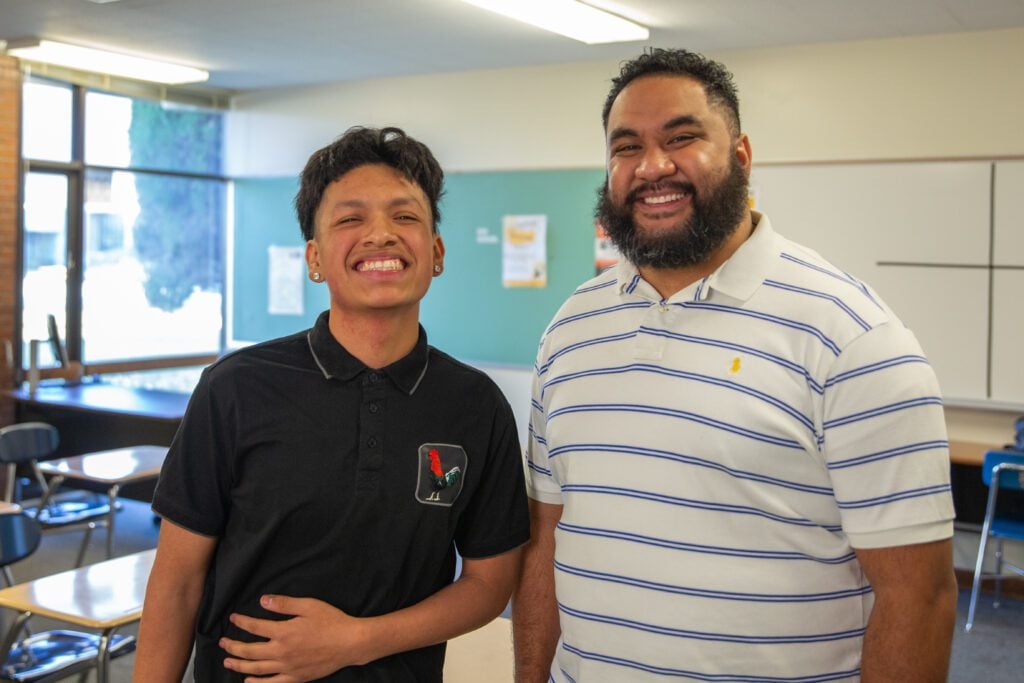
Mentorship is a central part of the graduation strategy. Promise Student Advocates combines the efforts of several existing mentorship programs such as Check & Connect through Granite School District, Mentor 2.0 through Big Brothers Big Sisters Utah and AmeriCorps-supported mentoring. Students who begin to disengage are connected to a dedicated adult mentor. Mentors meet weekly with students to review attendance and academic progress, set practical goals and address barriers. They also coordinate with teachers and families to ensure support extends beyond a single classroom.
This is how Hector connected with Alo Moli, a Check & Connect mentor. When they first met, Hector was missing class regularly and felt disconnected from school. Rather than focusing on discipline, Alo focused on building trust. He checked in each week, asked about school and life outside of school and helped Hector break larger challenges into manageable steps.
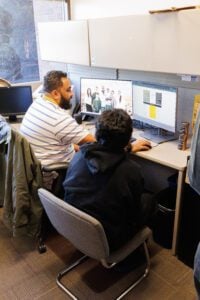 Alo understands the impact of mentorship firsthand. “I actually attended Cottonwood High School and I had a mentor here that gave me the same things that we’re doing with our Check & Connect program,” he said. “He made sure that I graduated high school and then in return I wanted to give back.”
The goals Hector and Alo set were clear and achievable: attend class more consistently, complete assignments and follow up with teachers. Each week reinforced accountability and built confidence.
“It makes me feel great,” Hector said. “Like someone actually cares about me.”
That sense of support changed Hector’s engagement. He began showing up more consistently. He started asking teachers for help. He made different choices about who he spent time with. He began thinking more seriously about graduation and long-term goals.
“From day one, we worked on getting him to class and helping him maintain his grades,” Alo said. “It wasn’t until last year that he really made the leap. Seeing him go from 13% being in class to 90% attending consistently was the biggest jump for us. That’s probably the proudest moment I’ve had with Hector.”
The change did not happen overnight. It resulted from steady check-ins, clear expectations and consistent encouragement. Over time, small improvements built momentum and reinforced Hector’s belief that graduation was within reach.
“Check & Connect mentors have the ability to build relationships with students,” said Ben Horsley, superintendent of Granite School District. “They understand individual academic needs and connect students to the right supports so they stay on track toward graduation.”
Together, these aligned systems and steady adult relationships create the conditions that help more students reach high school graduation prepared for what comes next.
 Turning Graduation into Opportunity
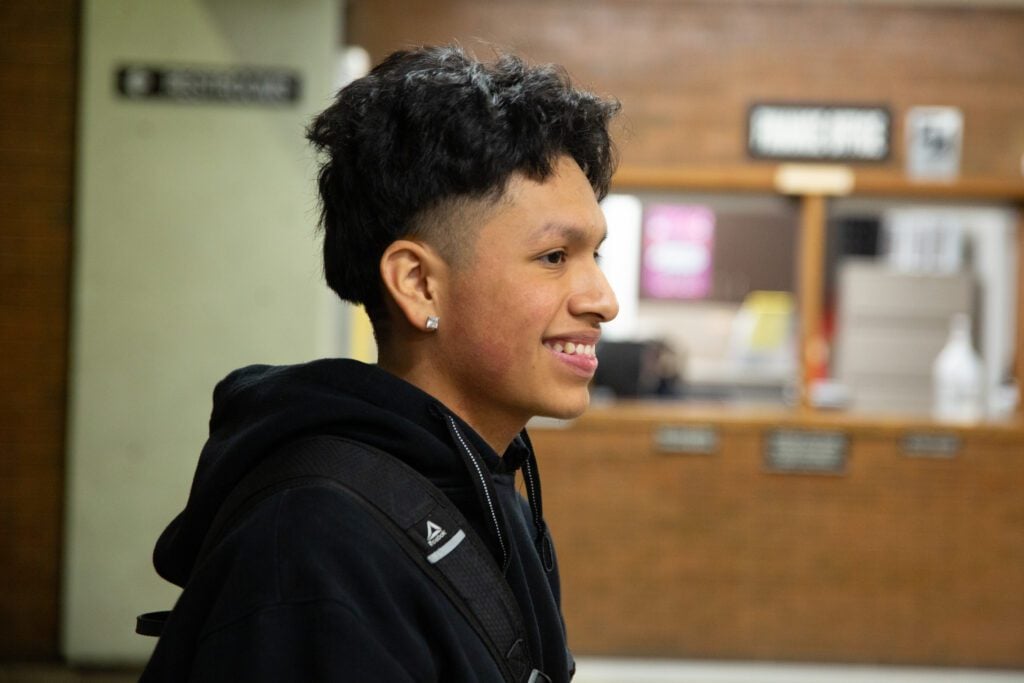
Hector understands what graduation means for his family. His mother was unable to finish high school because she had to work, and his older brother left school before earning a diploma. Hector wants a different path.
He plans to become a mechanic or start a custom construction business. He intends to attend community college to earn the credentials that will help him reach those goals. For him, graduation is the first step toward long-term financial stability and independence.
The 100% Promise is designed to make outcomes like Hector’s more common. It aligns schools, city leaders and community organizations around shared goals and shared accountability. It focuses on early identification of challenges, coordinated support and strong adult relationships.
Hector is now on track to graduate. He has a plan for what comes next and a network of adults who continue to support him.
“It really does take a whole village,” said Taryn Roch, senior partnership director for Promise Partnership Utah. “Every partner working together helps students feel that sense of belonging and continue working toward their futures.”
District leaders see the impact of that collaboration. “We’ve seen incredible success through having Check & Connect mentors,” said Horsley. “Every child, regardless of their circumstances, needs to feel connected.”
That approach is informed by lessons learned across the StriveTogether Cradle to Career Network. The idea behind Promise Student Advocates and student success plans grew from shared learning with partners nationwide. As Ahrens Terpstra shares, “Being part of the Cradle to Career Network has been game-changing for us. Our work with StriveTogether has made it possible for us to spread and scale excellent interventions that work. Any idea that we’ve ever had here locally has not stood on its own. It’s not been our own idea. It’s not been only informed by people here on the ground. It’s been informed by the contributions and the advancements of partners from across the Network.”
In South Salt Lake and West Millcreek, strengthening high school graduation is about creating clear, reliable pathways so that more young people complete school prepared for postsecondary education, training and career.
Hector’s journey shows what that looks like in practice. With coordinated systems and steady adult mentorship, more students can reach graduation with confidence and direction.