
Why High School Graduation Matters
High school graduation is a key milestone on the path to economic mobility. During high school, students transition from building foundational skills to applying them in ways that prepare them for postsecondary education, workforce training and careers. When students graduate on time, they’re more likely to access the education and networks that support economic mobility.
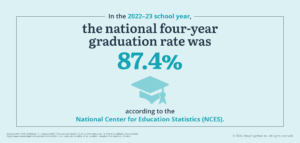
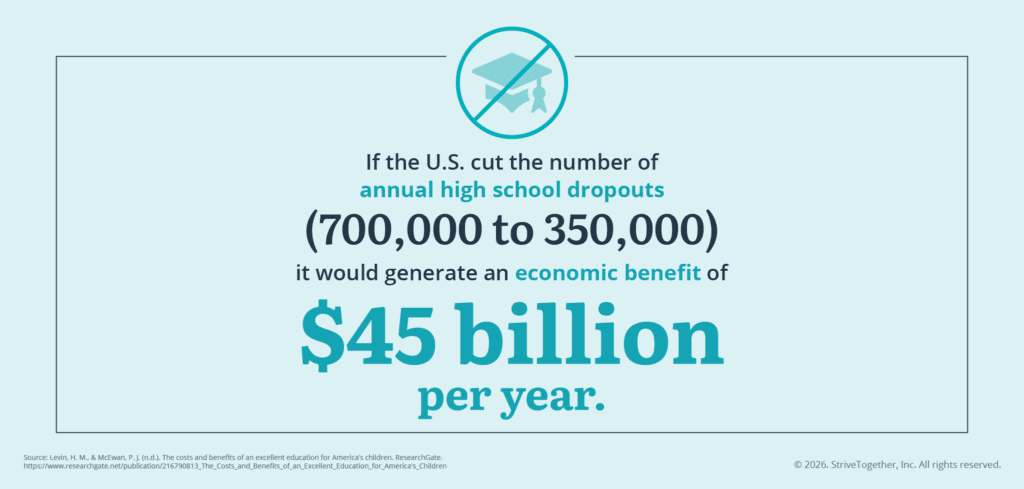
When students do not graduate, the effects reach far beyond one person. About 700,000 students nationally do not complete high school each year. For that single cohort alone, the lifetime public cost is an estimated $148 billion in lost tax revenue and higher public spending. The impact is felt by families, communities and the broader economy.
Students who graduate from high school are more likely to continue their education, secure stable employment, earn family-sustaining wages and have better long-term health. Together, these outcomes show whether students had the preparation and support needed to expand their opportunities later in life.
Recognizing its role in shaping long-term outcomes, StriveTogether includes high school graduation as one of seven shared measures across the cradle-to-career journey. These outcomes help communities understand whether students are reaching key milestones that prepare them for life after high school — whether that’s college, job training, earning a license or certification or starting a career. Across the StriveTogether Cradle to Career Network, partners are working together to strengthen the systems that help students graduate prepared for what comes next.
High School Graduation and Long-term Economic Opportunity
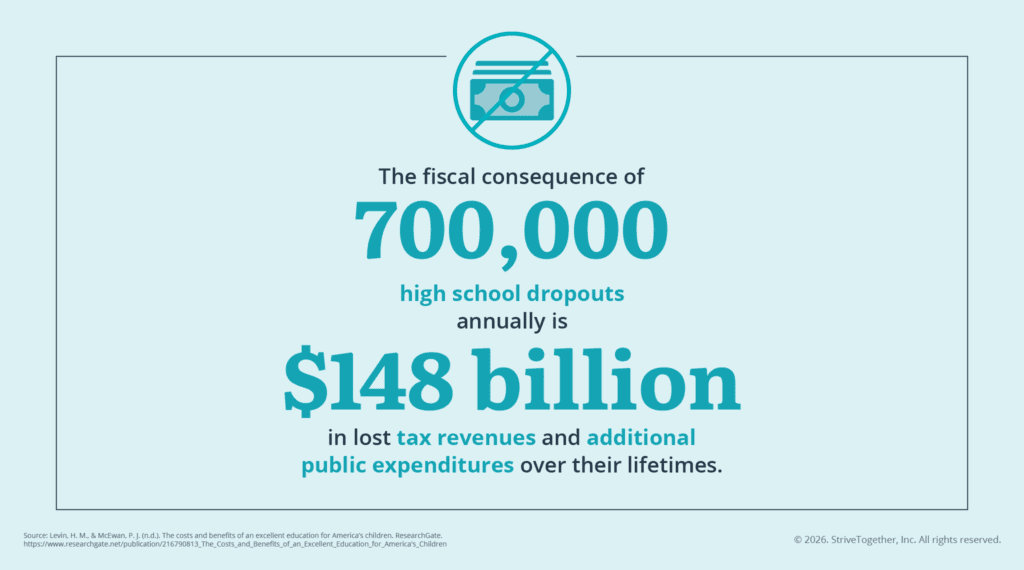
In the 2022–23 school year, the national four-year graduation rate was 87.4%, according to the National Center for Education Statistics (NCES). This is similar to the 87% rate in 2021–22 and close to pre-pandemic levels in 2018–19. While graduation rates have recovered from COVID-19 disruptions, progress has slowed and gaps remain.
In 2021, the unemployment rate for people without a high school diploma was 8.3%, compared to 6.2% for high school graduates, according to the U.S. Bureau of Labor Statistics. More recent data from the U.S. Bureau of Labor Statistics show the same trend in 2024: unemployment was 6.2% for adults without a high school diploma, compared to 4.2% for high school graduates. That means adults who finished high school experienced an unemployment rate roughly one-third lower than those who did not.
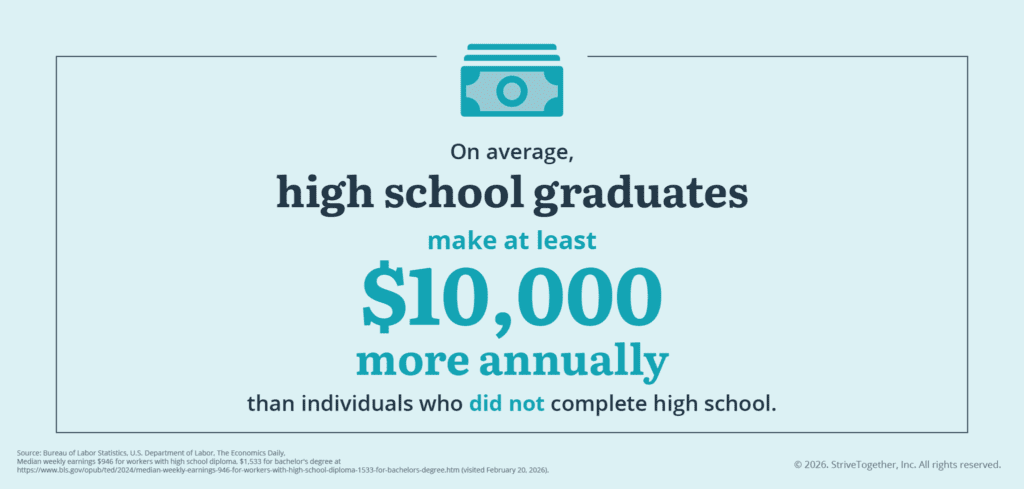
Earnings also increase with education. In 2024, adults with a high school diploma earned roughly $48,000 per year, compared to about $38,000 for those without one. On average, high school graduates earn about $10,000 more per year than individuals who do not.
Over time, that difference adds up. Research from Columbia University Teacher College, shows that cutting the number of students who leave high school without a diploma in half could generate an estimated $45 billion in long-term economic benefits. A diploma increases earning power, lowers unemployment risk and strengthens local economies.
Access to graduation is not the same for all students. National data show clear differences by student group. In 2021–22, 94% of Asian students graduated on time. About 90% of white students graduated, compared to 83% of Latine students and 81% of Black students. For American Indian or Alaska Native students, the rate was 74%. Students from low-income families and students with disabilities also graduate at lower rates than their peers.
These gaps reflect differences in access to strong schools, experienced teachers, stable housing, health care and college guidance. Without action, graduation gaps can lead to long-term income and employment gaps.
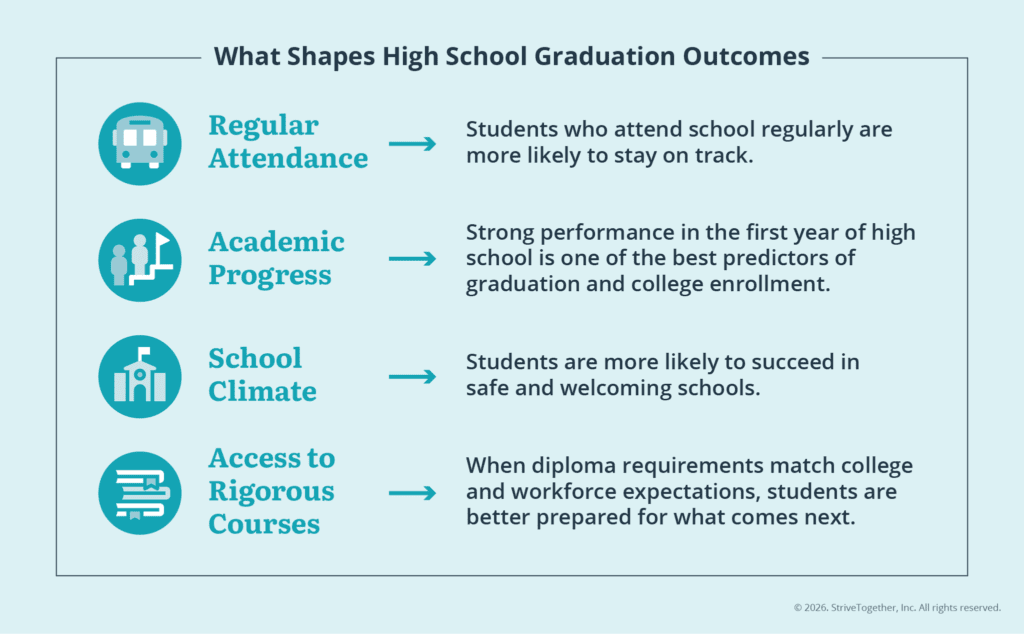
What Shapes High School Graduation Outcomes
High school graduation outcomes are shaped by several connected factors. These factors begin long before senior year and require schools and communities to work together.
- Attendance: Students who attend school regularly are more likely to stay on track. When students miss too many days, they are more likely to fall behind and less likely to graduate on time.
- Academic Progress: Grades matter, especially in ninth grade. Strong performance in the first year of high school is one of the best predictors of graduation and college enrollment. Early struggles can grow over time if students do not receive support.
- School Climate: Students are more likely to succeed in safe and welcoming schools. Positive relationships with teachers and staff help students stay engaged. Reducing suspensions and other exclusionary discipline practices also improves graduation outcomes.
- Access to Rigorous Courses: College- and career-ready classes prepare students for life after high school. When diploma requirements match college and workforce expectations, students are better prepared for what comes next.
Together, these factors determine whether high school graduation becomes a bridge to opportunity or a barrier to long-term success.
Building Strong High School Graduation Systems
Improving high school graduation rates requires more than individual programs. It requires strong, aligned systems that support students from ninth grade through senior year. A graduation system includes the policies, practices and supports that help students stay on track and complete high school prepared for what comes next. When these systems work together, students are more likely to graduate on time and transition successfully into college, training or the workforce.
Strong systems begin with early identification and support. Schools use data on attendance, course performance and behavior to identify students who may be at risk of falling behind. When educators respond early, they can provide help before challenges grow. Graduation systems also depend on tutoring, mentoring, counseling and family engagement to keep students connected to school. Wraparound services, including mental health support and assistance with basic needs, help remove barriers that can interrupt a student’s path to graduation.
Finally, strong systems connect high school learning to real-world opportunity. College and career pathways, dual enrollment programs and partnerships with employers help students see a clear path beyond graduation. Graduation systems must also address disparities across race, income and ability by expanding access to rigorous coursework and removing policies that limit opportunity. When communities align around shared data and shared goals, graduation becomes more than an individual achievement; it becomes a shared community outcome.
Graduation Strengthens the Cradle-to-Career Pathway
High school graduation matters because it marks readiness. It shows that students have gained the skills, knowledge and confidence needed to take their next step — whether that is enrolling in college, earning a credential or entering the workforce.
When students graduate prepared, they are better positioned to navigate challenges, adapt to change and pursue long-term goals. Communities that strengthen graduation systems are not only increasing completion rates. They are building pathways that support lifelong learning and economic mobility.
Improving outcomes requires coordinated action across education, workforce and community systems. With shared data and shared accountability, communities can ensure that more students reach this milestone ready for what comes next.
To learn more about how communities can strengthen high school graduation outcomes, explore the StriveTogether High School Graduation Playbook for guidance and examples from across the Cradle to Career Network.