

At a time when many young people are still exploring what comes next, Kristian Charles is already building a career in advanced manufacturing.
He works as a welder at Athena Manufacturing, part of a growing industry in Central Texas that offers strong wages and opportunities for advancement. Just a few years ago, he was in a high school classroom, beginning to see how his interests could take shape beyond school.
Across Central Texas, advanced manufacturing is one of the fastest-growing sectors, with more than 30,000 new jobs projected by 2030, creating new opportunities for students to enter high-demand, high-skill careers.
“Ever since I was a little kid, I liked to be outside and playing with my hands,” Kristian says. “My dad growing up was always doing maintenance around the house and on his vehicles, and I was the one holding the flashlight.” At the time, those moments were just part of growing up and something he enjoyed without thinking much about where they might lead.
In Central Texas, helping students turn those early interests into real opportunities is intentional work. E3 Alliance, a StriveTogether Cradle to Career Network member, works across the region to align school systems, colleges and employers so that students can move more seamlessly from education into careers.
Kristian’s journey is one example of that work in action. In high school, his interests began to take shape. As a freshman, he enrolled in automotive and welding classes, exploring different options without fully knowing where they might lead. Then one day, when students were invited to learn more about the program in the shop, something shifted.
“Everybody ran out of the classroom to go to the shop,” he recalls. “And I stayed back and put my name on the paper.” That decision to sign up for the Pathways in Technology Early College High Schools (P-TECH) welding pathway connected him to a program that blends high school, college, and career into a single, connected experience.
Through Austin Community College’s dual credit model, Kristian began taking college-level courses while still in high school, earning both high school and college credit at the same time. Over time, that experience transformed what school meant. He was working toward graduation and building toward a career. Through the program, he gained technical training, worked with industry-grade equipment and connected with employers who were looking for those exact skills.
By the time he graduated, Kristian had earned his high school diploma, a free associate degree in welding technology and a clear direction for what came next.
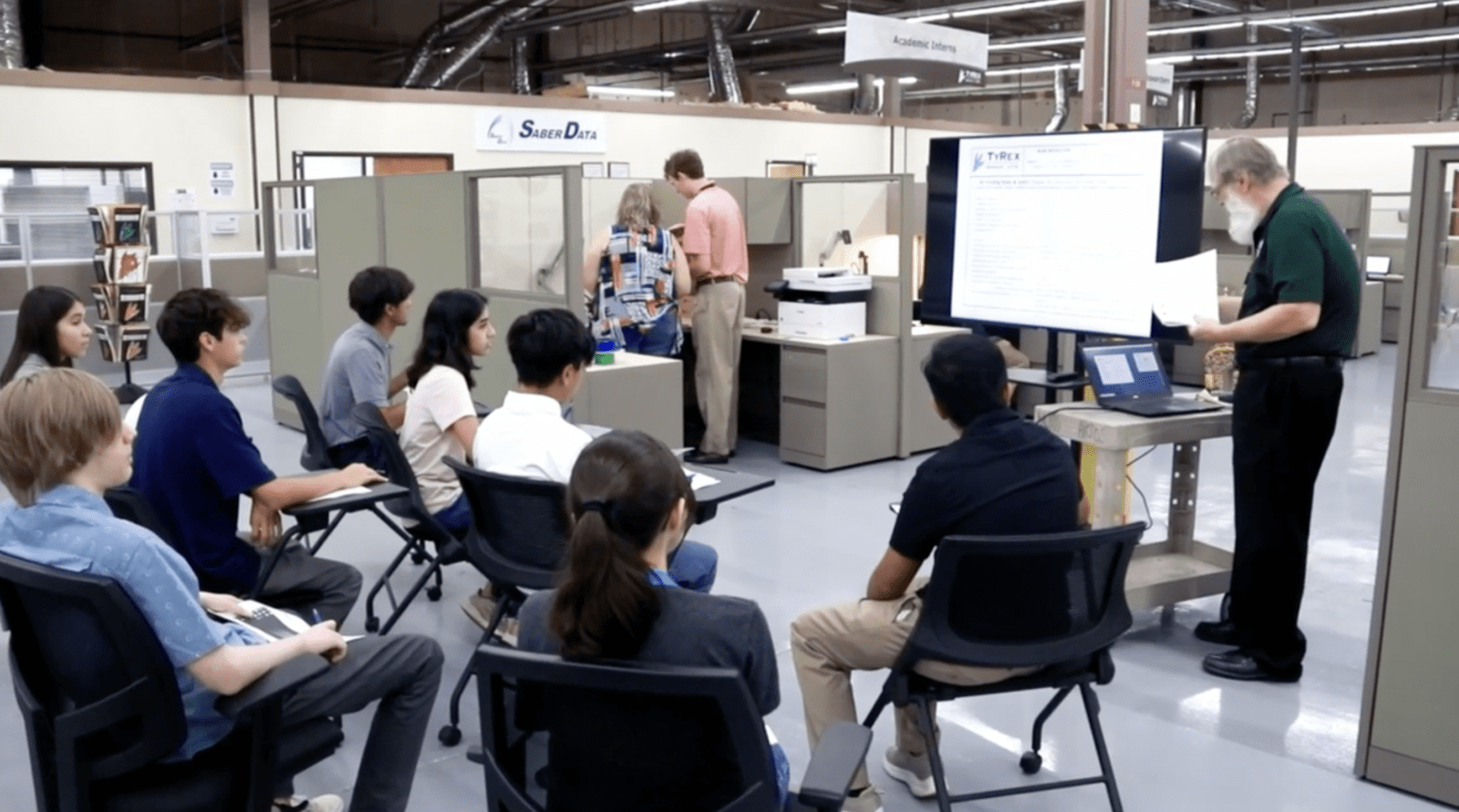 Building pathways that connect to careers
Kristian’s experience is part of a broader effort to align education and workforce systems across Central Texas. The region’s economy is growing rapidly, with more than 33,000 advanced manufacturing jobs projected by 2030. Across Central Texas, more than 1,900 employers are part of this sector, collectively employing tens of thousands of workers and continuing to expand. Employers are hiring, but many are struggling to find workers with the skills needed to fill those roles.
“Our employers are facing talent shortages, skills mismatch, competition for workers and an aging workforce,” said Alexis Flores, director of workforce development at the Austin Regional Manufacturers Association. “The data reflects what our manufacturers are telling us that the demand is there, but we’re struggling to find the skill sets needed to fill those gaps.”
As the region grows, so does the need to better understand what these careers actually look like.
“It’s not your grandpa’s manufacturing,” said Kyle Seipp, senior director of postsecondary and workforce readiness at E3 Alliance. “It’s not just standing on an assembly line…it’s working with robotics, automation and the systems that power production.” 
Today’s roles require workers who can understand how to operate machinery and how entire systems function, from production to final delivery. As manufacturing continues to evolve, employers are increasingly seeking workers with technical knowledge, including automation, robotics and strong foundational math skills, so they can grow from entry-level roles into more complex positions over time.
To respond to this challenge, partners across the region are working to make career pathways clearer and more connected.
“We are having to create ladders and pathways that are clear to incoming employees,” Alexis said.
E3 Alliance plays a central role in that work. As a backbone organization, it convenes school systems, postsecondary institutions, workforce organizations and employers around a shared strategy, helping ensure that programs are aligned, responsive and accessible to students and families. When E3 Alliance sees something working, the mission becomes scale. The goal is to take the promising programs already happening across the region and build the infrastructure, partnerships and investment needed to make them available to every student — so that Kristian’s experience is not the exception, but the norm.
As Kyle explains, the work is about “setting a table where employers, education and training providers come together” to align around shared goals and workforce needs.
That alignment represents a shift in how workforce systems operate. Rather than education systems working in isolation, employers are actively shaping the skills and competencies students develop, making sure that training leads directly to opportunity.
The pathway itself is intentionally structured. It begins with career awareness and exploration in school, moves into skill-building through coursework and dual credit opportunities, and continues with hands-on training, internships and direct connections to employers. Each step builds on the last, creating a clearer, more navigable route from education into employment.
When the advanced manufacturing project launched, the goal was to reach 1,750 enrollments in the 2024-2025 academic school year. By the end of 2025, that number had more than doubled, with over 3,300 students enrolled in advanced manufacturing pathways.
For Kyle, that milestone was only the beginning. “Once we met our goal of 1,750, the shift moved to retention strategies,” he says. “Being able to measure 3,300-plus enrollments in a manufacturing pipeline is fantastic but our goal has shifted. It’s no longer just about the number. It’s about creating a system, a health indicator for our employers to look at and contribute to, all the way through to employment.”
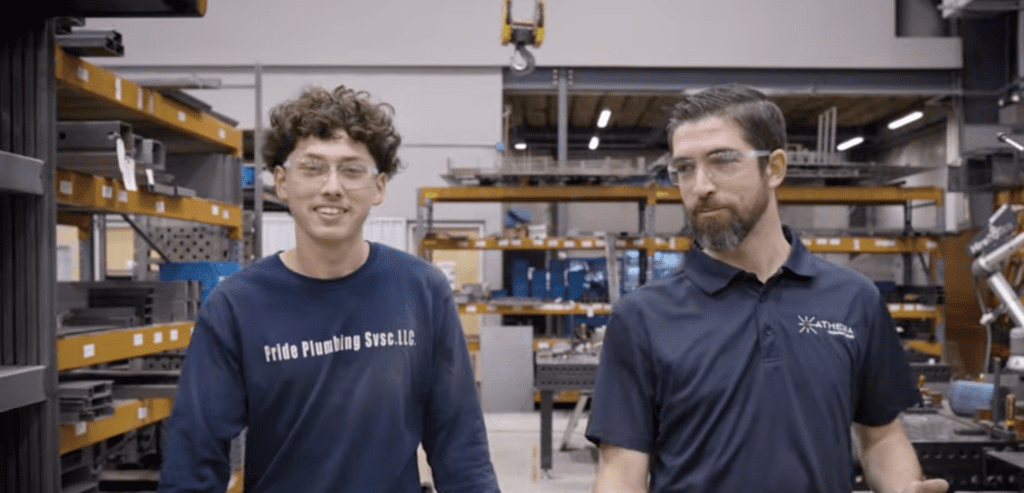 Turning experience into opportunities
For Kristian, that pathway became real through his P-TECH program because he was building toward a career. That pathway also included a paid internship with Athena Manufacturing, where he stepped into a real production environment and saw how his skills translated into work.
“They keep us involved in the whole process, from raw material to finished goods,” he says. “And during the process, they paid us.”
Being part of that environment changed how he saw himself. The work became immediate and meaningful. Across Central Texas, many of these opportunities are intentionally designed to be accessible. Short-term credentials, often completed in less than a year, allow students and adult learners to enter the workforce quickly while continuing to build skills over time.
These pathways are also designed to be stackable, allowing individuals to build additional credentials and move into higher-paying roles as they gain experience. Entry-level roles in advanced manufacturing often start between $40,000 and $55,000 annually, with opportunities to increase earnings over time.
By the time Kristian completed the program, he had options.
“I believe I had three job offers,” he says.
“When I come [to work], they have all the equipment, it’s like an adult playground for a welder,” he says. But what keeps him motivated goes beyond the tools. “You could just be welding all day, or you could take pride in your work and actually try to become better every day.”
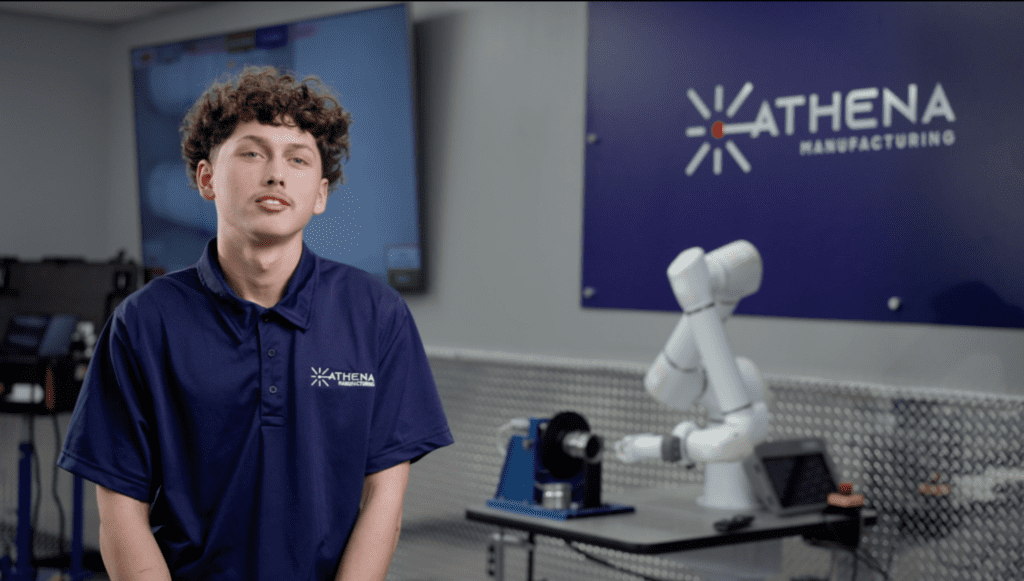 A Future Within Reach
For students like Kristian, entering the workforce is about what that job makes possible. Across Central Texas, partners are focused on connecting students to quality jobs: roles that offer stable wages, opportunities for advancement and access to benefits.
“Access to quality employment is the critical factor in breaking generational cycles of poverty,” said Sara Saleem, director of career pathways and workforce attainment at E3 Alliance. “It allows individuals and families to move from focusing on survival to investing in their future.”
When individuals have access to stable income and benefits, the impact extends beyond the workplace. It can mean access to health care, the ability to save, the possibility of homeownership and the opportunity to invest in future generations.
For Kristian, that future is already taking shape. His work continues to open new opportunities, including the chance to travel to Germany to earn an international welding certification, an experience supported by his employer.
At signing day, when students commit to their careers, Kristian had the opportunity to reflect on what the journey meant.
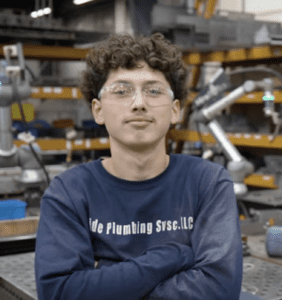 “I get to make my parents proud,” he says. “They get to see all the hard work.”
As Richard Tagle, president and executive director of E3 Alliance, explains, employment is a key indicator of long-term success. “Employment and economic mobility are the real test of whether people are thriving in the community,” he said.
Behind that moment is a broader system working together to make pathways visible and accessible. In Central Texas, that community includes educators, employers and partners like E3 Alliance, all working toward a shared goal of connecting students to opportunity. Through its leadership of the Accelerate ED design team, E3 Alliance and its partners are building an aligned, scalable model for advanced manufacturing pathways. This work builds on and expands the region’s P-TECH approach, focusing on access and completion of industry-aligned credentials with minimal disruption for students as they move from high school into postsecondary education and careers.
The longer-term goal of connecting more than 10,000 workers to advanced manufacturing careers in Central Texas reframes what success actually looks like. It is about shifting the mindset of employers who, through their education partnerships, have the power to change occupational realities and break cycles of poverty across Central Texas zip codes.
At the same time, partners are working to strengthen the experience itself, ensuring students have the academic, advising and support systems they need to stay on track, complete their credentials and transition into careers with confidence.
This work is also laying the foundation for broader impact, creating a framework that can expand to other critical workforce sectors and regions across the state. And as more systems align education with workforce needs, more individuals will have access to careers that support long-term economic mobility and strengthen the region as a whole.